
















By Sophia Richards
There is a specific kind of exhaustion that sets in when you have been trying to leave your toddler’s room for forty-five minutes.
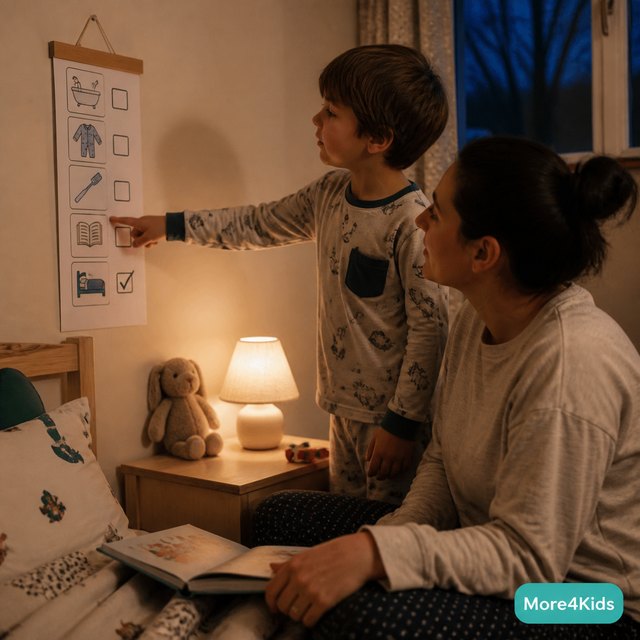
You do the final hug. You sing the song. You tuck in the blanket. But the moment your hand touches the doorknob, the crying starts. Or maybe the pleading. *“Don’t go, Mommy. Stay with me.”* Your heart breaks a little, but your patience is also wearing dangerously thin. You just want to wash your face and sit on the couch in the quiet.
If this is happening in your home right now, you are not doing anything wrong. Toddler separation anxiety at bedtime is incredibly common, but knowing that does not make it any less exhausting. As a mom of three, I have walked the floor, sat by the crib, and negotiated with tiny, tearful dictators more times than I can count.
What I have learned both as a mother and an early childhood educator is that this phase is not about defiance. It is about a little brain trying to make sense of distance and darkness. When we shift how we respond, we can usually help them—and ourselves—find a path to sleep.
Why Toddler Separation Anxiety at Bedtime Happens
Table of Contents
To understand why your toddler suddenly cannot bear for you to leave, you have to look at the world through their eyes. During the day, they are busy and distracted. But at night, everything gets quiet. The distractions strip away, and they are left alone in a dark room.
For a young child, separation anxiety peaks around 18 months, but it often flares up again around ages two and three as their imaginations develop. They are old enough to imagine things in the shadows, but not quite old enough to logic their way out of fear.
The American Academy of Pediatrics (HealthyChildren.org) points out that a child’s clinginess is actually a sign of healthy attachment. They know you are their safe place. The goal is not to sever that attachment, but to help them feel your safety even when you are not physically in the room.
Gentle Strategies to Ease the Transition
When you are in the thick of it, you need practical tools, not just theory. Here is what actually helps when you are trying to ease the anxiety.
**Stretch the runway.** Often, the transition to bed is too abrupt. We rush through pajamas and teeth brushing because we are tired. But an anxious toddler needs a longer, slower runway. Try dimming the lights in the house an hour before bed. Make getting your toddler ready for bedtime a calm, predictable sequence rather than a race to the finish line.
**Leave a piece of yourself behind.** Transitional objects are magic for this age. It does not have to be a blanket. When my middle child went through a fierce clingy phase, I gave him one of my softest, worn-in t-shirts to sleep with. It smelled like me, and it gave him something tangible to hold when I walked out the door.

**Try the "I will check on you" promise.** Instead of saying, "I am leaving for the night," tell them, "I am going to go get a drink of water, but I will come back and check on you in two minutes." Then, *actually come back*. You build trust. Next time, it's five minutes. When they know you are coming back, the panic of the departure often subsides.
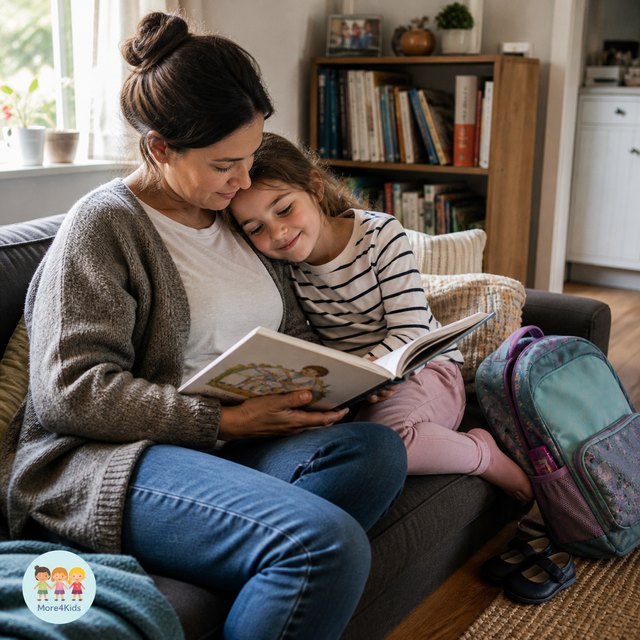
**Embrace the power of story.** Reading together is not just an educational tool; it is a nervous system reset. The importance of bedtime stories goes beyond literacy. Sitting close, hearing the rhythm of your voice, and sharing a quiet moment grounds a worried toddler.
What to Avoid When Anxious Tears Start
It is easy to accidentally make the anxiety worse when we are frustrated. There are a few things I learned to stop doing:
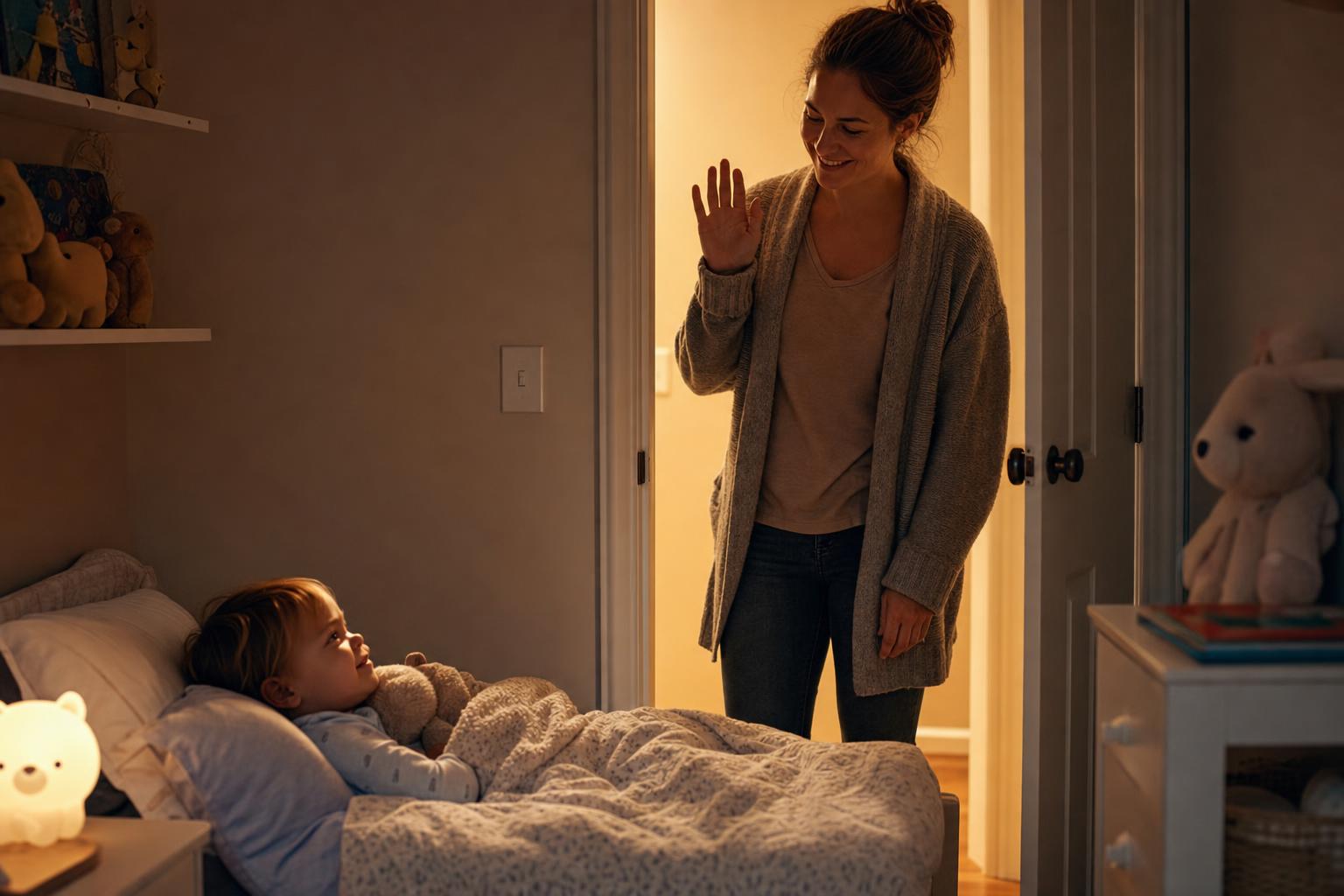
- **Sneaking out.** It is incredibly tempting to slip out like a ninja when they finally close their eyes. But if they wake up and realize you vanished, the panic intensifies. Always say goodnight, even if it brings a few tears. Trust is more important than a quiet exit.
- **Over-explaining.** When they are crying, their logical brain is offline. Do not try to reason with them about why they need sleep or why the room is perfectly safe. Keep your words simple: "You are safe. Mommy is right down the hall. I love you."
- **Inconsistency.** If you let them sleep in your bed on Tuesday, stay in their room for two hours on Wednesday, and demand they sleep alone on Thursday, their anxiety will spike. Creating bedtime rituals works because the predictability tells their brain there is no danger.
When Will This End?
When you are in the middle of a sleep regression or an anxiety flare-up, it feels like it will last forever. You start doing the math on how many years it will be until they go to college.
Take a deep breath. It will not last forever.
Toddler separation anxiety at bedtime is a season. If the fear seems to be escalating beyond normal clinginess, or if it disrupts their ability to function during the day, reaching out to your pediatrician or reviewing resources from the Sleep Foundation can provide more tailored guidance.
For tonight, just do the next right thing. Keep your voice low. Keep your boundaries clear. You are their safe harbor, and eventually, they will learn to sail into sleep knowing you are always there when they wake up.
Related Articles

Meet Sophia Richards Sophia Richards is an early childhood educator, passionate writer, and the proud mom of three energetic kids. With a degree in Education and over a decade of hands-on classroom experience, Sophia bridges the gap between professional teaching strategies and everyday family life. At More4Kids, she translates complex child development concepts into practical, actionable parenting tips that families can use at home.
Whether she is sharing positive reinforcement techniques, educational crafts, or honest reflections on the chaos of raising three children under one roof, Sophia’s goal is to empower parents to foster resilience and joy in their kids. When she isn't writing or lesson planning, you can find her organizing neighborhood scavenger hunts or trying out new kid-friendly recipes.
Areas of Expertise: Early Childhood Education, Positive Parenting, Sibling Dynamics, Educational Play, Family Wellness.

Add Comment