








By Sophia Richards
There is a particular kind of quiet panic that sets in somewhere in the second trimester, usually late at night, when you realize this small person is going to need a name — and you have no idea how to choose a baby name that feels right.
As a mom of three, I have been there three times. Each one was different. With my first, we had a shortlist for months and changed our minds in the hospital. With my third, we were still saying two names out loud in the car on the way home from the appointment, trying them on like coats. So if you feel stuck, you are in very normal company.
The good news is that choosing a baby name is not really one big decision. It is a series of small, manageable ones — sound, meaning, family, practicality — and once you have a way to think through them, the whole thing gets a lot less overwhelming.
These are 25 tips I have gathered from naming my own children, listening to a lot of other parents, and spending more time than I will admit browsing names. Take the ones that help. Leave the rest.
If you want a place to actually explore names while you read this — meanings, origins, and audio pronunciation for each one — keep our baby names directory open in another tab. I will point you back to it a few times, because it is genuinely the easiest way to test the ideas below.
Start With Meaning and Origin
Table of Contents
The story behind a name often matters more later than it does now. These first tips are about choosing something with roots you will be glad to explain one day.
**1. Look up what the name actually means.** A name your child will carry for life deserves five minutes of research. Meanings can be quietly lovely — Olivia traces back to the olive tree and peace, Aurora to the dawn. You do not have to pick for meaning alone, but you do want to know what you are signing up for.
**2. Notice the origin.** A name's origin can connect your child to a language, a place, or a faith. Hebrew, Latin, Greek, Old English, Irish — each carries a different texture. If heritage matters to your family, origin is a natural place to start.
**3. Say it with the meaning in mind.** Some parents fall in love with a meaning and let the sound follow; others do the reverse. Try both directions. A name like Noah carries "rest" and a story many families already know — that resonance can be part of the appeal.
**4. Avoid meanings you would not want explained at school.** Every so often a beautiful-sounding name has a meaning you would rather not have your eight-year-old discover during a class project. A quick check saves an awkward conversation later.
**5. Let the meaning be a tiebreaker, not a tyrant.** If you are stuck between two names you love equally, the one with the meaning that moves you is a perfectly good way to decide. But do not talk yourself out of a name you adore just because its meaning is plain. Plenty of wonderful names simply mean "strong" or "light."
For any name in this article, you can tap through to its page in our baby names directory and hear it pronounced, see its origin, and read its meaning — which makes this first round of research much faster than guessing.
How to Choose a Baby Name That Sounds Right
So much of naming a child comes down to sound — how it lands in the ear, how it pairs with your last name, how it feels to say a hundred times a day. This is where I spent the most time with all three of mine.
**6. Say the full name out loud.** First, middle, and last, several times, in a normal voice. Names that look perfect on paper sometimes trip on the tongue. Charlotte Reed flows; some other pairings clatter. Your ear will tell you.
**7. Listen for the flow with your surname.** A long first name often pairs nicely with a short surname, and vice versa. If your last name is one strong syllable, a softer multi-syllable first name like Amelia can balance it beautifully.
**8. Mind the bumping sounds.** When the first name ends and the last name begins on the same sound, they can blur together — "James Smith" can soften into "Jame Smith" in fast speech. It is not a dealbreaker, just something to hear before you decide.
**9. Check the rhythm.** Names have a beat. Two soft syllables, one strong one, a gentle landing — read it the way you would a line of a poem. Luna has a tidy two-beat rhythm that sits well in front of many surnames.
**10. Hear it shouted across a playground.** Picture yourself calling this name at the park, at bedtime, at a graduation. A name has to work loud and tender, formal and silly. In my house, the real test was always whether a name still felt right when called up the stairs for the third time. If it holds up in all those tones, it is a keeper.
**11. Use the audio pronunciation to settle disagreements.** When you and your partner are saying a name two different ways, a neutral spoken version helps. Every name page in our baby names directory has an audio button — handy for international names like Mateo or Aisha where you want to honor the correct pronunciation.

Think About the Name in Real Life
A name does not live on a list. It lives on forms, in classrooms, in nicknames you did not choose. These tips are about the everyday reality.
**12. Test the initials.** Write them out. A monogram that spells something unfortunate is the kind of thing you only notice after the birth announcement has gone out. Thirty seconds now saves a lifetime of small grins.
**13. Think about nicknames — the ones you like and the ones you don't.** Most names get shortened. If you love James but cannot stand "Jim," it is worth knowing that going in. Sometimes the nickname is the real reason you love a name; sometimes it is the reason to pass.
**14. Consider the spelling.** A creative spelling can feel special, but it can also mean your child spells their name out loud for the rest of their life. There is no wrong answer here — just go in with eyes open about the trade-off.
**15. Run the future-adult test.** The name has to fit a toddler, a teenager, a job applicant, and a grandparent. A name that is adorable on a baby but hard to picture on a resume is worth a second thought. The best names grow up well.
**16. Picture the first day of school.** How many other children will share this name in the classroom? That is not a reason to avoid a popular name — just useful information. Some parents are happy for their child to be one of three; others want their child to be the only one.
**17. Make sure it travels.** If your family spans countries or languages, a name like Santiago or Leila that is recognized and pronounceable in more than one culture can be a real gift to a child who will move between them.
Honor Family, Culture, and Heritage
Some of the most meaningful names carry a story from before your child was born. These tips help you weave that in without losing yourself in obligation.
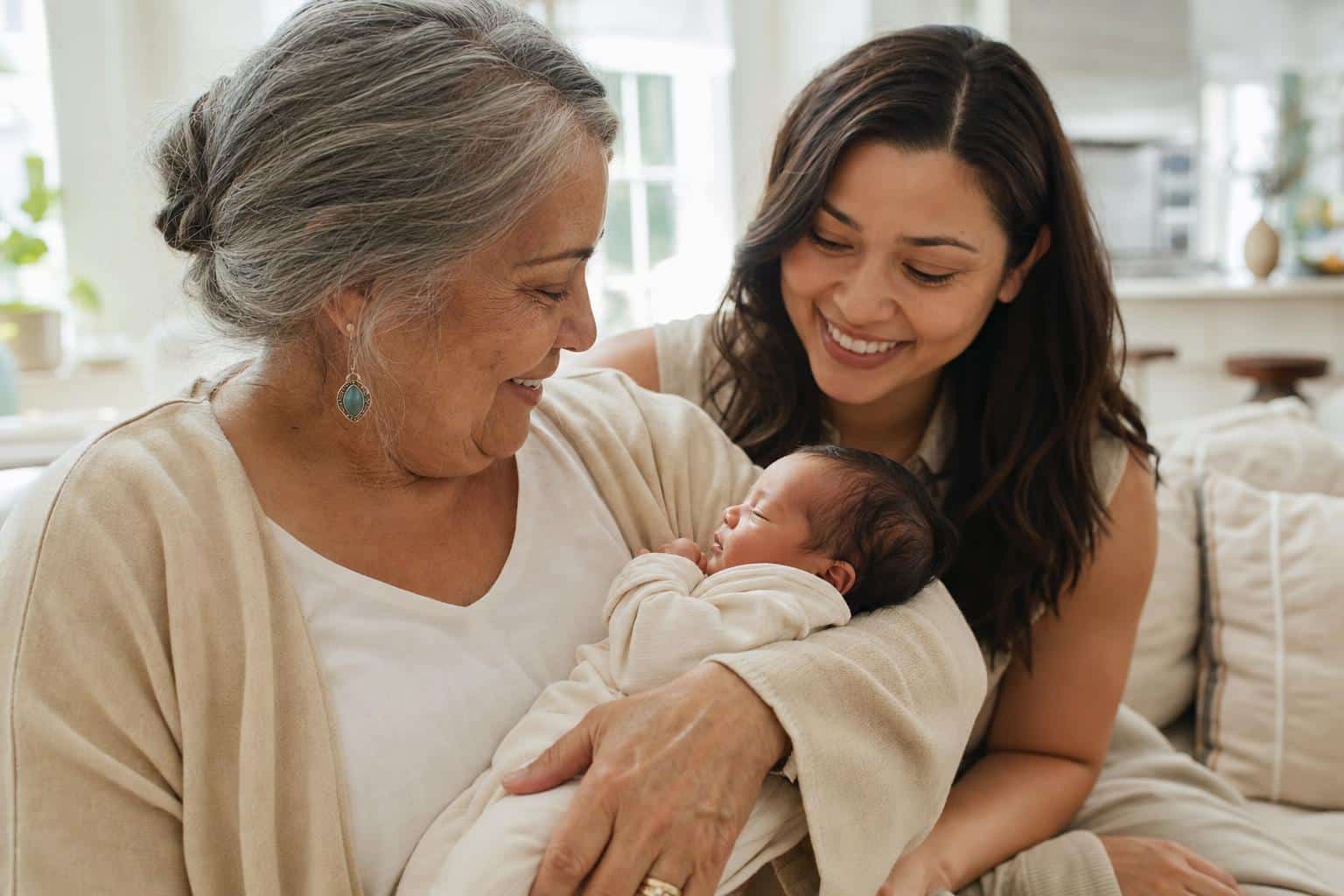
**18. Consider a family name — gently.** Honoring a grandparent or a beloved relative can give a name beautiful weight. Just make sure you genuinely like the name itself, not only the gesture. A family name you love is a treasure; one you resent is a long sentence.
**19. Use the middle name as a pressure valve.** When two sides of the family both have hopes, or when you love a bold first name and a traditional family name, the middle slot is where everyone can win. It carries honor without crowding the everyday name.
**20. Honor heritage with intention.** A name like Aisha or Mateo can connect a child to a culture, a language, or a grandparent's homeland. If you are choosing across cultures, learning the correct pronunciation and meaning is part of honoring it well — which is exactly what the directory's audio and origin notes are for.
**21. Talk to your partner about the why, not just the what.** Often the disagreement is not really about the name — it is about a memory, a relative, or a feeling attached to it. In my family, the names that finally stuck were the ones where we could each say why it mattered. Naming what the name means to each of you usually moves the conversation further than another round of the shortlist.
Balance Popularity and Uniqueness
This is the seesaw almost every parent ends up on: familiar enough to wear easily, distinct enough to feel like theirs.
**22. Check where a name actually sits in popularity.** A name can feel rare and still be climbing fast. The U.S. Social Security Administration publishes the official list of the most popular baby names each year — a quick look tells you whether a name is genuinely uncommon or about to be everywhere.
**23. Decide how much "uniqueness" you actually want.** There is no virtue in a name no one can say, and no shame in a classic. Emma and Henry are popular because they are timeless. Popularity is information, not a verdict — decide what it means to you.
**24. Read about the name's broader story.** Editorial naming resources like Nameberry can tell you whether a name is rising, fading, or quietly classic, and surface ones you had not considered. Use them to explore, then come back to what feels like yours.
**25. Give yourself permission to wait.** You do not have to decide today, and you are allowed to change your mind in the hospital. Some of the best names arrive after you have met the baby. A shortlist of two or three you both love is a finished job — the final pick can wait for a face.
A Gentle Way to Actually Decide
If I had to compress all 25 of these into one piece of advice, it would be this: narrow to a short list you both love, then live with those names for a week. Say them. Write them. Imagine them called up the stairs.
The same principle that helps with a calm daily routine for kids helps here — a little structure takes the pressure off. And if you find yourself anxious that you are somehow getting it wrong, it can help to remember how much of childhood is shaped by unstructured, loving time together, not by the perfect name. Your child will grow into whatever you choose, and the name will come to mean *them*.
When you are ready to explore, our baby names directory has thousands of names with meanings, origins, and audio pronunciation — including a deep collection of international names — so you can hear and understand each one before it makes your list.
If there is one thing I have learned across three kids, it is that the name you agonize over becomes, almost overnight, simply *theirs* — impossible to imagine any other way.
Whatever you land on, choose it with a little joy and a lot less pressure. As a parent, you already love this child. The name is just the first of many gifts you will give them.
Related Articles

Meet Sophia Richards Sophia Richards is an early childhood educator, passionate writer, and the proud mom of three energetic kids. With a degree in Education and over a decade of hands-on classroom experience, Sophia bridges the gap between professional teaching strategies and everyday family life. At More4Kids, she translates complex child development concepts into practical, actionable parenting tips that families can use at home.
Whether she is sharing positive reinforcement techniques, educational crafts, or honest reflections on the chaos of raising three children under one roof, Sophia’s goal is to empower parents to foster resilience and joy in their kids. When she isn’t writing or lesson planning, you can find her organizing neighborhood scavenger hunts or trying out new kid-friendly recipes.
Areas of Expertise: Early Childhood Education, Positive Parenting, Sibling Dynamics, Educational Play, Family Wellness.





Add Comment