







By Sophia Richards
Sibling rivalry has a way of making the whole house feel smaller.
One child grabs the marker. Another snaps back. Someone storms away. A parent steps in, already tired, trying to decide whether this is a little disagreement, a pattern that needs attention, or simply the sound of kids learning how to live close to each other.
Handling sibling rivalry well does not mean forcing children to hug, apologize before they are ready, or pretend nothing happened. It means helping kids come back to safety, fairness, and connection after normal everyday friction.
As a mom of three, I have learned that repair works best when it is small, calm, and repeated over time. One perfect phrase will not fix sibling rivalry. But a family rhythm that protects safety, models respect, and gives kids chances to try again can help relationships soften.
Start With Safety, Not The Apology
Table of Contents
When siblings are upset, the first goal is not a beautiful apology. The first goal is safety.
If children are hitting, threatening, intimidating, or too overwhelmed to listen, separate them calmly. Use short language:
- "I am going to give each of you space."
- "Bodies need to be safe first."
- "We can talk after everyone has calmed down."
This is not punishment. It is leadership.
For everyday sibling friction, repair can happen later. For serious, repeated, or unsafe conflict, parents may need more support from a pediatrician, counselor, school professional, or another trusted expert. Not every conflict should be treated as normal sibling rivalry.
Nationwide Children's Hospital notes that sibling rivalry is common, but it still requires adult guidance, fairness, and attention to each child's needs. That distinction matters. We can normalize everyday tension without minimizing harm.
Do Not Force The Hurt Child To Move On
One of the easiest parenting shortcuts is also one of the least helpful:
"Say sorry. Give a hug. Now go play."
The problem is that forced apologies can teach children to perform repair without feeling it. Forced hugs or affection can make the hurt child carry the burden of making things look better.
Instead, slow the moment down.
Try:
- "I hear that you are still upset."
- "You do not have to be ready to play yet."
- "The repair can start with words, space, or a plan for next time."
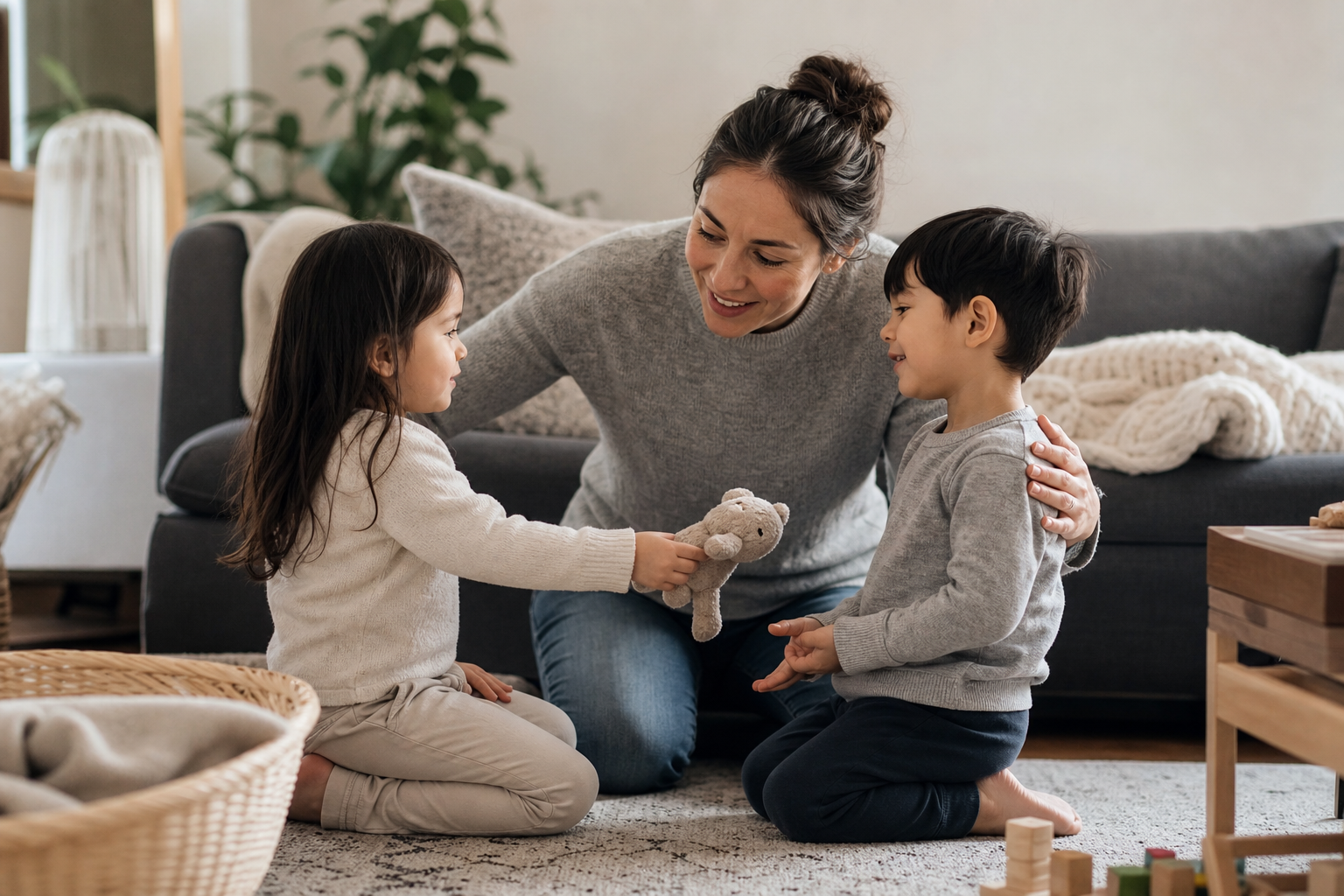
Repair is not the same as instant closeness. Sometimes repair means the child who caused harm takes responsibility. Sometimes it means the hurt child gets space. Sometimes it means the parent names the boundary clearly: "Grabbing is not okay. We will try again with turns."
That kind of repair is less tidy, but it is more honest.
Give Kids Better Words
Children often need language before they can use it well.
In early childhood classrooms, I have seen how much children benefit from practiced phrases. Not because the words are magic, but because they offer a path when feelings are big.
Try teaching a few repair phrases when everyone is calm:
- "Can I try that again?"
- "I did not like what happened."
- "I need space first."
- "I am sorry I grabbed it."
- "Next time, can we take turns?"
- "I want to keep playing, but I need a different plan."
These phrases work best when adults model them too. If I use a sharp tone, I can say, "I want to try that again in a calmer voice." That teaches more than a lecture about respectful communication.
This is also where effective communication with kids matters. Children learn repair not just from what we tell them to say, but from what they hear us practice in ordinary family moments.
Watch For Comparison Traps That Fuel Sibling Rivalry
Sibling rivalry gets harder when children feel ranked.
"Why can't you be more patient like your sister?"
"Your brother never makes this much fuss."
"You are the older one. You should know better."
Most parents have said some version of these words in a tired moment. The trouble is that comparison can turn a small conflict into a bigger identity story. One child becomes "the difficult one." Another becomes "the responsible one." Neither role helps children repair well.
A safer frame is specific and behavior-focused:
- "The marker was grabbed."
- "The door was slammed."
- "The words were hurtful."
- "The game needs a turn-taking plan."
When we name the behavior instead of the child's character, we leave room for the child to make a different choice next time.
Create Chances To Be On The Same Team
Warm sibling relationships are not built only in conflict talks. They grow through repeated chances to be on the same team.
The More4Kids guide to stronger sibling relationships emphasizes togetherness, shared activities, fairness, and avoiding comparisons. That is a long-game view, and it fits real family life.
Try low-pressure teamwork:
- build a blanket fort together
- make a snack plate for the family
- race the timer to clean one small area
- choose music for dinner prep
- carry library books to the car
- plan a kindness surprise for another family member
The point is not to make siblings best friends on command. The point is to give them safe, ordinary moments where they can practice working side by side.
If chores are part of the plan, keep them fair and age-appropriate. Simple chores for kids can build responsibility, but chores should not become a punishment for sibling conflict.
Use Play As Practice, Not A Cure
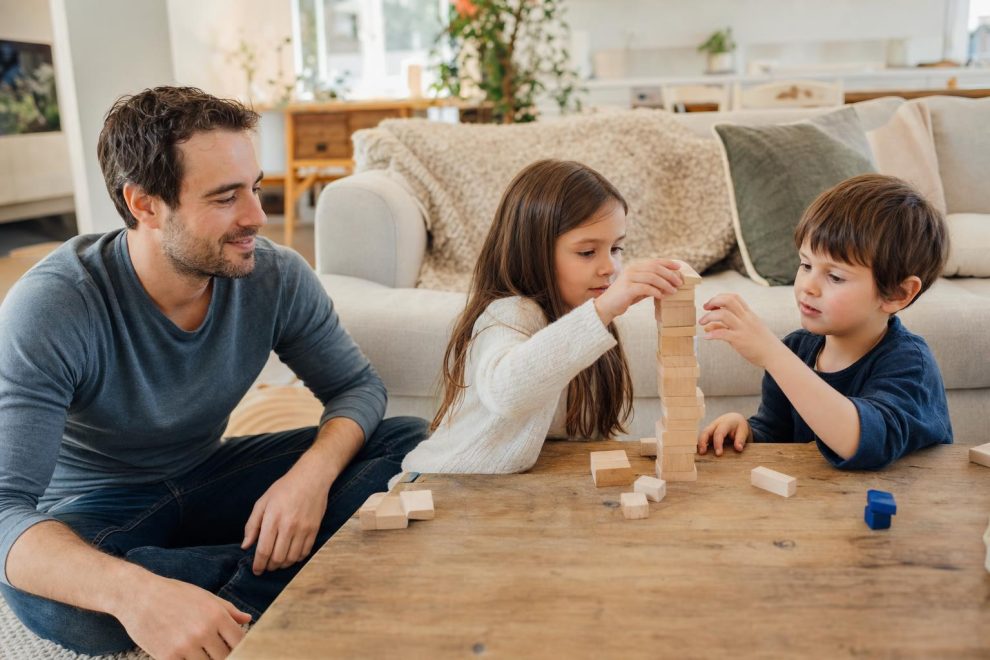
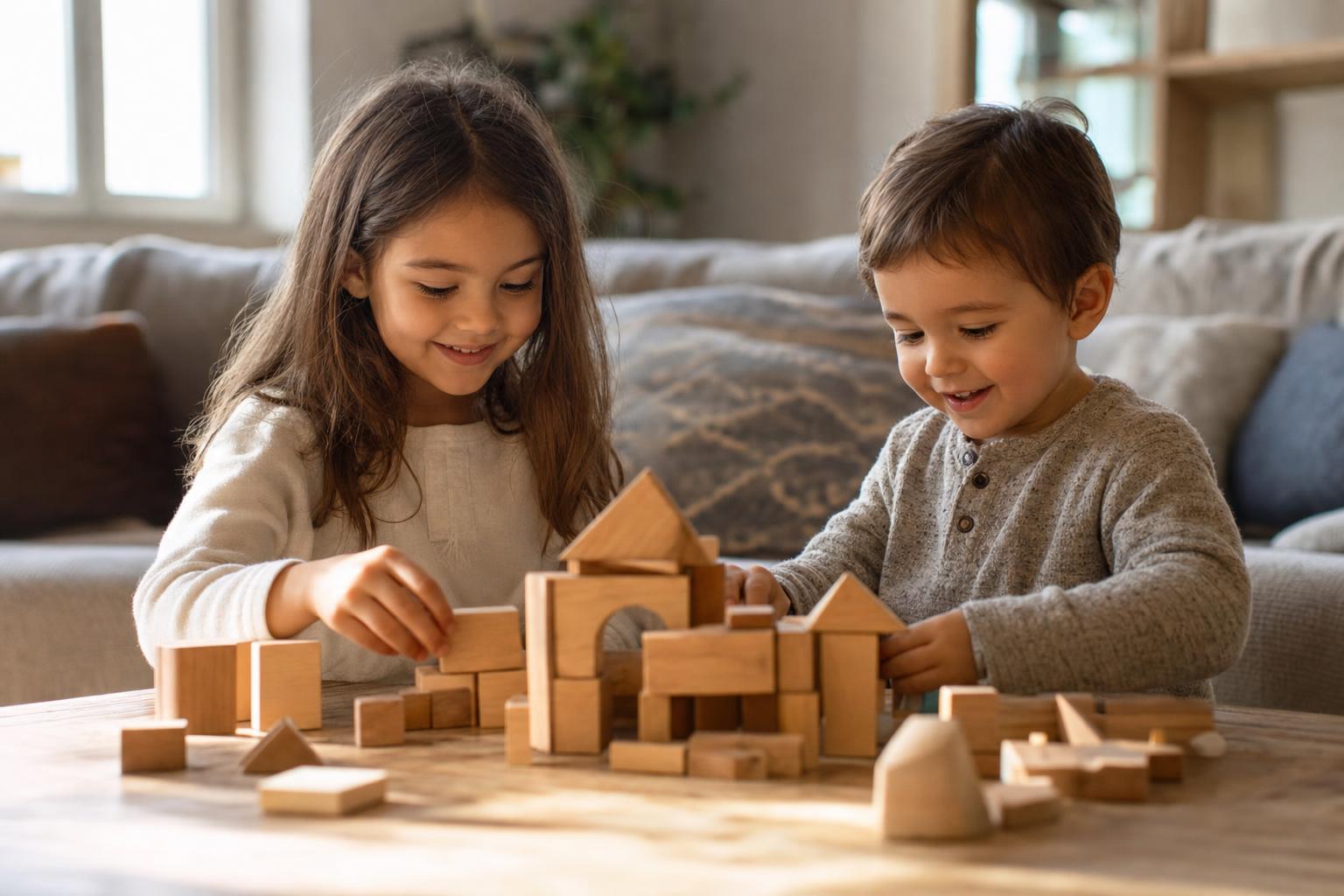
Play can help siblings practice turn-taking, negotiation, shared imagination, and flexibility. It is not a cure for conflict, and it should not be used to push children together before they feel safe.
After everyone has calmed down, you might offer a simple cooperative option:
- "Do you want to build separate towers in the same room?"
- "Could you make one obstacle course together?"
- "Would a card game with clear rules feel easier?"
- "Do you want to take turns choosing songs while we clean?"
The phrase "together but with space" can help. Some siblings reconnect best by doing parallel activities before they are ready for full cooperation.
When families already protect free time for play, those playful moments can become practice grounds for sharing ideas and solving small problems. Just keep the expectation modest. Play gives kids chances to practice; it does not guarantee peace.
Try A Three-Step Sibling Repair Routine
For normal everyday friction, a simple repair routine can help.
Step 1: Calm bodies first.
Separate children if needed. Offer water, space, quiet, or a reset activity. Do not try to process the whole conflict while everyone is still flooded.
Step 2: Name what happened without assigning a family role.
"The game stopped when the pieces were knocked over."
"One person wanted a turn, and the other was not finished."
"The words got sharp."
Step 3: Choose one next repair action.
The repair action can be small:
- replace the toy
- return the item
- make a new turn plan
- use one repair phrase
- play separately for now
- help rebuild what was knocked down
Not every conflict needs a long conversation. Sometimes the most respectful repair is short, concrete, and followed by a fresh start.
A Gentle Place To Start
If sibling conflict has been wearing everyone down, start with one tiny shift.
Do not force a hug. Do not make the hurt child hurry. Do not expect one phrase to repair a relationship. Start by making the moment safe, naming the behavior, and giving each child a way back that does not require pretending.
Sibling repair is really relationship practice. Kids learn, slowly, that conflict does not have to be the end of connection. They learn that people can pause, take responsibility, make space, try different words, and begin again.
That is a lesson worth practicing gently, one ordinary family moment at a time.
Related Articles

Meet Sophia Richards Sophia Richards is an early childhood educator, passionate writer, and the proud mom of three energetic kids. With a degree in Education and over a decade of hands-on classroom experience, Sophia bridges the gap between professional teaching strategies and everyday family life. At More4Kids, she translates complex child development concepts into practical, actionable parenting tips that families can use at home.
Whether she is sharing positive reinforcement techniques, educational crafts, or honest reflections on the chaos of raising three children under one roof, Sophia’s goal is to empower parents to foster resilience and joy in their kids. When she isn’t writing or lesson planning, you can find her organizing neighborhood scavenger hunts or trying out new kid-friendly recipes.
Areas of Expertise: Early Childhood Education, Positive Parenting, Sibling Dynamics, Educational Play, Family Wellness.




Add Comment