













Here’s What My Students Want Us to Know
Table of Contents
This spring, for the third time in my career as a high school English teacher, I am offering an elective called, “Teen Film.” In this course, we study films spanning from Rebel Without a Cause to Lady Bird in an attempt to answer questions about whether ‘teen films’ accurately portray the teen experience, how or why they exploit it, and try to sort out who these films really are written for.
This year, I began the class by asking, in an anonymous survey, for students to reflect on things they wish their parents or other adults in their lives understood better about what it’s like to be a teenager today. I also asked them to identify some defining differences between childhood and adolescence. Despite varying personal experiences, their answers all outlined the same larger points and sentiments. So, here is what one small group of high school students want the parents, family, coaches, teachers, and mentors in their lives to know.
Let’s Throw Some Trust Their Way
If childhood is about dancing like nobody’s watching, then adolescence is about being way too insecure about yourself to even think about dancing. Of course, this is nothing new. For any of us adults reading this, we can probably access some startingly acute teenager- specific angst and self- loathing without great effort. As carefree (or careless) as teens may often seem, we all know that just underneath the surface, there is likely a whole lot of emotional strife being negotiated at a quick clip. My students in this class acknowledged that things like insecurity, pressure, and self- confidence are still pillars of teenagedom. Many of them think of their childhood as the privileged among us can– more blissful innocence and less responsibility.

I suppose as parents, as adults, we need to ask if we are allowing room for the young people among us to grow in the ways that they may know are best, even if these ways are uncomfortable or confusing to us. During my twelve years in education, I have seen a positive trend in students’ ability to act from a place of empathy, understanding, and curiosity about the world. Even when things have been the darkest in our country– the weeks following school shootings and the Covid-19 lockdowns come to mind– I still found this to be true. I have to wonder then: should we be trusting them a bit more? Maybe they know how to take us in the direction we need the world to go.
They May Know More, But They Need Us More Than Ever
These larger questions connected to their answers to the main question I asked– what do you wish we could understand just a bit better about what it’s like to be a teenager? Overwhelming, they expressed that their parents and other adults in their lives sell them short. They shared that adults lean on their own teen experiences not as a way to empathize and connect, but as a way to assert that they “know better.” And yes, sometimes that is true, but being a teenager today is different than it was thirty years ago. Simple acknowledgment of that fact– that we are all figuring out this world together, and that the teens actually living the teen life might just know a thing or two– would make a big difference. They also said that while things such as phone usage and social media can definitely be problematic (they don’t deny it– I mean, who does?!), it’s also given them a greater understanding of the world at large.
One student expressed it as such, “Adults often view us only as reckless or immature, but we have more insight and maturity than they’d expect us to. I wish they would just ask.” Again, as a teacher who spends hours a day asking students to express their thoughts, opinions, and insights, I can attest to this truth. When I was in high school, except for what I happened to catch when walking through the living room while the evening news played, I’m not sure I knew much about what was going on in our country or the world. I had little exposure to major happenings, trends, and social concerns. Today’s high school students have opinions on presidential candidates, social movements, the economy, and world affairs. Are all of their thoughts well-researched? No. Do many of them parrot what they hear at home? Of course. But I find myself, year after year, having more nuanced and educated conversations about very complicated world issues with younger and younger students.
The Guide on the Side
So, let’s give them some credit. But also, let’s give them some support. Study after study, especially as the world emerged from pandemic lockdowns, supports that every age group feels more worried about the world and is experiencing more stress and anxiety than just a few years ago. But the group that is feeling it most are young people. In fact, according to a Stanford University study published in December 2022, the stress of the pandemic altered and actually aged adolescents’ brains. Indeed, the brains of average 17 year olds might not be comparable to teens from just a few years ago. While there is still much to be studied, it seems that the stress our young people have had to endure are altering them in ways that may take years to fully understand. Truly, things are different than they used to be.
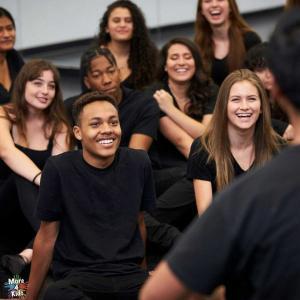
“Being a teenager is a lot– the difficulty of having to try and figure out what you like, who you are, what you want, and all the while feeling like you’ll never know. It’s so draining to balance school, a social life, extracurriculars, and figure out how to deal with the world and all its problems. We want to try to do it on our own, but even though we don’t show it, we need your help, too.”
With the right support, they really are capable of taking on the challenges of the world. Let’s give them a chance.

For the last 12 years, Lauren has had the great honor of working as a high school English teacher at a unique alternative school on Long Island. In the background though, she was always writing and has recently begun freelancing for sites that focus on personal and community wellness, fitness, parenting, and motherhood.
She is also a runner, avid beach-goer, and mother two to wild and amazing children, Leila (5) and Will (4). She is passionate about racial justice, better care for moms and babies, women- led and owned businesses, LGBTQ+rights, and the fostering of a more just, compassionate and sustainable world.



Add Comment