













 It is a universal fact that all parents want their children to be happy and healthy. It is also widely accepted that positive emotional development will play a big role in how healthy and happy your youngster really is. Encouraging your child’s emotional development will begin about the day that you bring that precious bundle home from the hospital, and will not end until the day you send him off to college. However, the toddler years are a key time for encouraging your child’s emotional development so that he will grow into a happy and well-adjusted child and adult. Here is some tips and ideas that may help.
The Importance of Identifying Emotions
Imagine that you are at a play date with your two-year-old, and you see your child swipe a toy out of the hands of another tot. That child screams in anger and hits your child in the arm with his rounded fist. What just happened? Children at this stage are beginning to learn how to communicate with one another, but the vocabulary is not there to support their need for communication. This leads to frustration, which results in a scenario like this one much of the time. This is the perfect opportunity to begin to teach your child how to identify emotions and needs and communicate them effectively to the world around them, which will encourage your child’s emotional development.
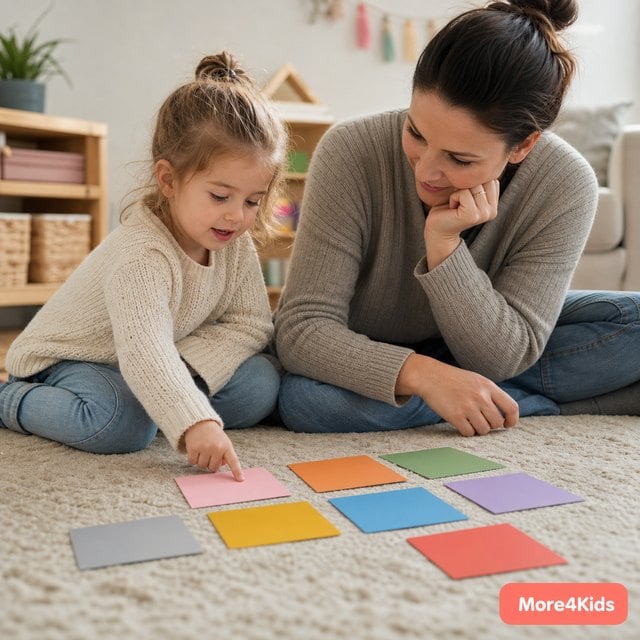
This process will begin with a parent’s example of stating needs and feelings and acting upon them appropriately. Part of [tag-cat]parenting[/tag-cat] includes being able to communicate effectively with your child. You can, for example, explain how you feel in various situations, so that your child can begin to associate a particular word like “happy” or “angry” with certain emotions that he is feeling. This will also teach your child that feelings are legitimate, but the way we express them needs to be acceptable. Your child can learn to say things like, “When you took that toy from me, it made me angry.” This gives your child an outlet for his feelings without needing to resort to a physical response like hitting, and will encourage your child’s emotional development in a positive way.
When your child does communicate a feeling to you, make sure that you acknowledge his emotion as well. If you see him looking angry, tell him that he seems angry, and ask him what is wrong. Allow him to express his feelings and the cause of them to you, and this process will become a healthy habit in his life. You can take his communication to the next step by asking what he thinks will make him feel better. This will teach your child valuable problem solving skills that he will carry with him throughout life.
Handling Tantrums and Building Independence
Another method of encouraging your child’s emotional development and growth is through the method with which you decide to handle his [tag-tec]tantrums[/tag-tec]. It is generally not a matter of “if” tantrums will be thrown but “when”, and the “when” usually begins around the age of eighteen months. Many experts agree that the best way to deal with a tantrum is to ignore it until the child wears himself out and regains self control. The height of a fit is not the time to try to exercise parental authority, since this will generally only serve to escalate the situation. Once your child is calm, you can talk to him about the appropriate ways to voice his displeasure or frustration over a particular issue.
Building independence is another way to encourage your child’s emotional development, since learning to complete tasks on his own will build his [tag-ice]self-esteem[/tag-ice] and confidence. A confident, independent child is usually a happy one, so allow your child to begin to dress himself and help with basic chores around the house when he is ready and able to do so. Most children will love to feel like they are a productive and contributing member of the family, and these tasks will encourage your child’s emotional development in very positive ways.
How can parents encourage emotional development in toddlers?
Table of Contents
The article encourages parents to help toddlers name feelings, communicate needs, and practice acceptable ways to express emotions. Parents can model emotional language and guide children toward problem solving instead of hitting or melting down.
Why is identifying emotions important for toddlers?
Toddlers often feel more than they can explain. The article says naming feelings like happy or angry helps children connect words to emotions and gives them a healthier way to communicate with others.
What should parents do when a toddler communicates a feeling?
The article recommends acknowledging the feeling, asking what is wrong, and helping the child think about what might make things better. That turns emotional moments into practice with communication and problem solving.
How should parents handle toddler tantrums?
The article says tantrums often begin around eighteen months and are best handled by ignoring the fit until the child calms down. Afterward, parents can talk about better ways to express frustration.
How does independence support emotional growth?
Letting children do age-appropriate tasks, such as dressing themselves or helping with basic chores, builds confidence and self-esteem. The article connects that growing independence with happier emotional development.



Add Comment