Your baby is communicating with you from birth. At first, you will have no idea what is wrong when baby cries. As you respond to your baby's cries and meet her needs, you are teaching her how to communicate. Here are some ideas to help your baby develop their communication skills.
Your baby is communicating with you from birth. At first, you will have no idea what is wrong when baby cries. Soon you will come to know the difference between a cry in hunger and a tired cry. As you respond to your baby’s cries and meet her needs, you are teaching her how to communicate. As she grows, your communication will your baby will too.
Throughout the pregnancy, your baby listened to your voice. When babies are born, they are able to recognize the sound of their mother’s voice. Studies have demonstrated that babies will turn in the direction of their mother’s voice over any other. Both you and daddy should talk to your baby during the day. While he or she won’t understand your words, they will be soothed by the sound of your voices. As they grow, they will recognize the sounds, rhythm and pattern of their native language.
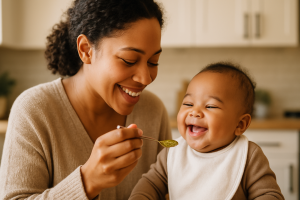
Talk to your baby during your typical daily routine. This may feel strange at first, but it will soon come naturally. Say things like, “Let’s go in the bedroom and change your diaper.” Talk while you are feeding and rocking the baby. Explain what you are doing and where you are going. “We are putting on your sweater. We’re going to take a ride in the car. We are going to grandma’s house. Grandma loves you and wants to see you.”
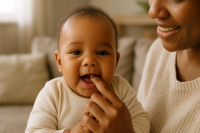
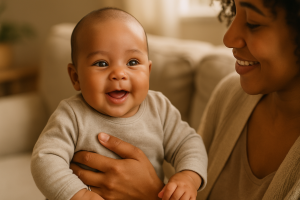
When your baby is around two months old, she will start making cooing sounds. By three months, she will coo at you. Repeat the sounds she makes and she’ll continue the “conversation.” Her coos will soon turn to squeals as she hears the sounds she makes repeated. This game is not only fun, but your baby is learning a lot about conversations and communication.
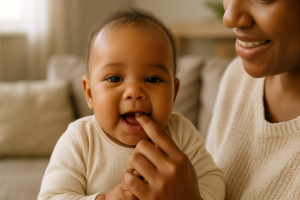
This babbling will continue for the next several months. By around six months of age, your baby will begin to repeat the sounds you make. This is a key milestone in language development. The baby is learning that certain sounds are used in communication and is attempting to replicate the sounds he hears from his parents. Continue to play with him by making sounds and having him repeat them.
By the time your baby is nine months old, she is beginning to understand that words have meaning. She understands that the words ball, doll and cup stand for actual objects. Over the next month or so, she will respond to simple commands as her understanding of language increases. When you ask her to throw you the ball, you will be surprised to see the ball rolling toward you.
At this age, baby is adding new words to her vocabulary at an astounding pace. Even though she is not speaking them aloud, she understands and recognizes %%$ words. Spend time looking at picture books with your baby. Look for simple books with one object on each page. Books with pictures of every day objects, such as cup, dog and butterfly are made for babies. Ask your baby to “point to the apple,” or “show me the cat.”
Continue talking and reading to your baby. As he grows, he will begin responding in two word and then short, complete sentences. The more time you spend talking to your child, the more you will encourage his language development. Modeling communication and giving your child plenty of time to practice his communication skills are the best way you can help your baby develop his language skills.
How do I encourage language development in a newborn?
Talk to your baby from day one. Even though they won’t understand your words, they will be soothed by your voice and will start to recognize the patterns and rhythms of your language. Narrate your daily routine out loud: “We’re changing your diaper now. Let’s put on your sweater.” This steady stream of warm, purposeful talk builds the foundation of language long before baby says her first word.
What are the key language milestones in a baby’s first year?
By about two months, your baby will start cooing. By three months, they’ll coo back at you in a back-and-forth conversation. Around six months, babbling begins and your baby will start repeating sounds they hear from you. By nine months, most babies begin to understand that words have meaning — they’ll respond to simple commands like “throw me the ball.” Each of these is a genuine step in language development.
What is the best way to help my baby learn new words?
Reading simple picture books together is one of the most effective strategies. Look for books with one clear image per page — everyday objects like cups, dogs, and butterflies. Point to each image and name it. Ask your baby to “point to the apple” or “show me the cat.” The combination of seeing an image and hearing the word helps babies build a vocabulary they understand long before they can say the words themselves.
How does responding to my baby’s sounds help their language development?
When your baby coos and you coo back, they learn something fundamental: sounds have an effect on other people, and conversation is a two-way thing. By repeating their sounds back to them, you’re teaching them the rhythm of communication — someone speaks, then someone responds. This back-and-forth is the earliest form of conversation and one of the most powerful things you can do to support your baby’s language skills.
Simple reading routines can make everyday language practice feel warm and natural.
Meet Maya Bennett Maya Bennett is a pregnancy and parenting writer and a mom of two. After navigating two very different pregnancies of her own — and years spent reading, researching, and trading stories with other expectant parents — she fell in love with helping families feel ready for what's ahead. At More4Kids, Maya turns the big questions and quiet worries of pregnancy into warm, practical guidance, from the first positive test through the tender early days with a newborn. She believes every parent-to-be deserves clear answers and a little reassurance along the way.
Meet Maya Bennett Maya Bennett is a pregnancy and parenting writer and a mom of two. After navigating two very different pregnancies of her own — and years spent reading, researching, and trading stories with other expectant parents — she fell in love with helping families feel ready for what's ahead. At More4Kids, Maya turns the big questions and quiet worries of pregnancy into warm, practical guidance, from the first positive test through the tender early days with a newborn. She believes every parent-to-be deserves clear answers and a little reassurance along the way.












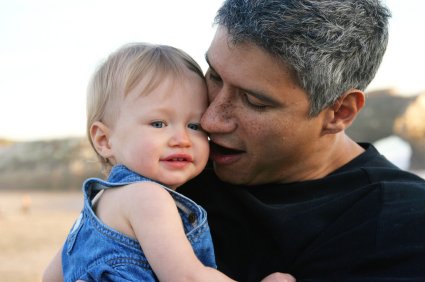
 Your baby is communicating with you from birth. At first, you will have no idea what is wrong when baby cries. Soon you will come to know the difference between a cry in hunger and a tired cry. As you respond to your baby’s cries and meet her needs, you are teaching her how to communicate. As she grows, your communication will your baby will too.






Add Comment