










 by Patricia Hughes
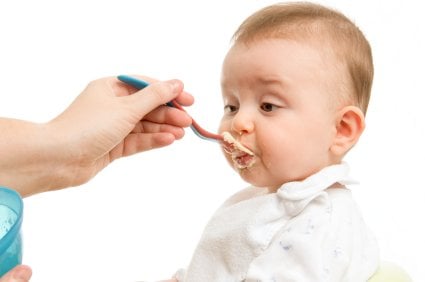
The day when baby starts eating solids is an exciting milestone for both of you. More and more parents are skipping the baby food aisle at the grocery store in favor of making their own baby food at home. Making homemade food for your baby has many advantages. It’s easy to get started. All you need are fresh foods and something for grinding, like a small hand held grinder or food processor.

Once you have introduced a few foods and the baby hasn’t had a reaction, you can start combining foods. The combination of flavors increases interest in solids for some babies and gets your baby used to a variety of flavors and textures. When you puree the food, make it thinner for younger babies and thicker as the baby grows. Foods can be thinned with water or breast milk.
What are the main benefits of making homemade baby food?
Homemade baby food is fresher — jarred commercial food can be months old by the time you open it. It also contains fewer additives, since many commercial brands include salt, sugar, butter, or starchy fillers that add no nutritional value. Making your own is also more economical, especially when you freeze extra portions in ice cube trays. And if you choose organic produce, you significantly reduce your baby’s exposure to pesticides and herbicides.
How do you store and save money with homemade baby food?
When you prepare more than your baby needs in one sitting, freeze the extra in ice cube trays — cover them with a lid or plastic wrap to keep them fresh. This lets you remove only as many cubes as you need at each feeding, eliminating waste. Freezing extra portions makes homemade baby food significantly cheaper than buying commercial jars over the many months your baby eats pureed food.
What are the best first foods to puree for a baby?
Bananas and avocados are excellent starting points because they are easy to digest and require little preparation. Other good early choices include apples, pears, peas, carrots, squash, and sweet potatoes. Vegetables and hard fruits like apples should be cooked first to soften them before grinding. Introduce only one new food at a time so you can spot any allergic reaction before moving on to the next.
How do I adjust the texture of pureed baby food as my baby grows?
Start with thin, smooth purees for younger babies and gradually increase the thickness as your baby develops and can handle more texture. You can thin any puree by adding a little water or breast milk until it reaches the right consistency for your baby’s current stage. Once your baby has tried several individual foods without reactions, you can also begin combining flavors to build interest in eating solids.
Biography
Patricia Hughes is a freelance writer and mother of four. Patricia has a Bachelor’s Degree in Elementary Education from Florida Atlantic University. She has written extensively on pregnancy, childbirth, parenting and breastfeeding. In addition, she has written about home décor and travel.

Patricia Hughes
Latest posts by Patricia Hughes (see all)
About the author

Patricia Hughes
Patricia Hughes is a freelance writer and mother of four. Patricia has a Bachelor’s Degree in Elementary Education from Florida Atlantic University. She has written extensively on pregnancy, childbirth, parenting and breastfeeding. In addition, she has written about home décor and travel.




Add Comment