Most parents are very excited about baby’s first feedings. However, some babies resist solids. Here are some ideas that may help...
by Patricia Hughes
Most parents are very excited about baby’s first feedings. After waiting, reading and wondering about what and when to feed solid foods to the baby, you decide to give it a try. However, some babies just aren’t as enthusiastic about the idea of eating from a spoon as their mothers.
When to Start
Advice on when to start feeding a baby solid food continues to be debated. Not too long ago, four months was the rule of thumb, then four to six months to the current six month recommendation. Still among pediatricians, opinions vary about when to start feeding solids.
More important than age may be developmental factors. Your baby should have reached a few developmental milestones before attempting to start solids. The baby should be able to sit unassisted, have lost the tongue thrust reflex and show interest at mealtimes. For more information on signs of readiness check out: http://www.kellymom.com/nutrition/solids/solids-when.html
Despite otherwise showing signs of readiness, some babies will resist all solids. In some cases, it’s best just to skip it for a while. There is no harm in continuing with breastfeeding alone for a bit longer. Try again in a week or two and there may be a big change in attitude.
If not, eventually you may decide you want to coax the baby a bit. The first thing to consider is when to try again. Pick a time when your baby is happy and relaxed. For many babies, this is in the morning, after a good night's sleep. A bit of cereal in the morning or some mashed banana is a good choice.
Don’t start out with solid foods, since the baby will be hungry after waking in the morning. A hungry baby will not be in the mood to accept something new and just wants to be fed. Breastfeed your baby or give her a bottle before attempting to introduce solids. She will be more receptive to trying it if she isn’t starving.
Try a variety of foods, but try them one at a time. While many doctors still recommend rice cereal as a first food, this advice is changing. Some doctors are recommending vegetables or fruits that are more nutritionally dense as first foods. Don’t introduce too many at once, since it will be harder to identify allergic reactions.
If your baby is resisting the pureed banana, try a real one. If the baby has a few teeth, she can mash bits of mashed banana and swallow them. Give her tiny bits at a time and see if she changes her mind and decides solids aren’t so bad. Banana and avocado are good choices for finger feeding, since they are soft and easy to mash.
If baby resists, keep trying. Try not to get stressed out about it. He won’t starve himself and soon he will be eating everything in sight. Don’t let it become a power struggle that will only escalate and potentially cause problems later with eating. If you just keep at it, eventually he will start eating.
A different way to start solids
If spoon-feeding is a daily battle, a baby-led weaning starter kit with suction plates and soft self-feeding spoons lets your baby explore food on their own terms.
As an Amazon Associate, More4Kids earns from qualifying purchases. This does not change what you pay.
Biography
Patricia Hughes is a freelance writer and mother of four. Patricia has a Bachelor’s Degree in Elementary Education from Florida Atlantic University. She has written extensively on pregnancy, childbirth, parenting and breastfeeding. In addition, she has written about home décor and travel.
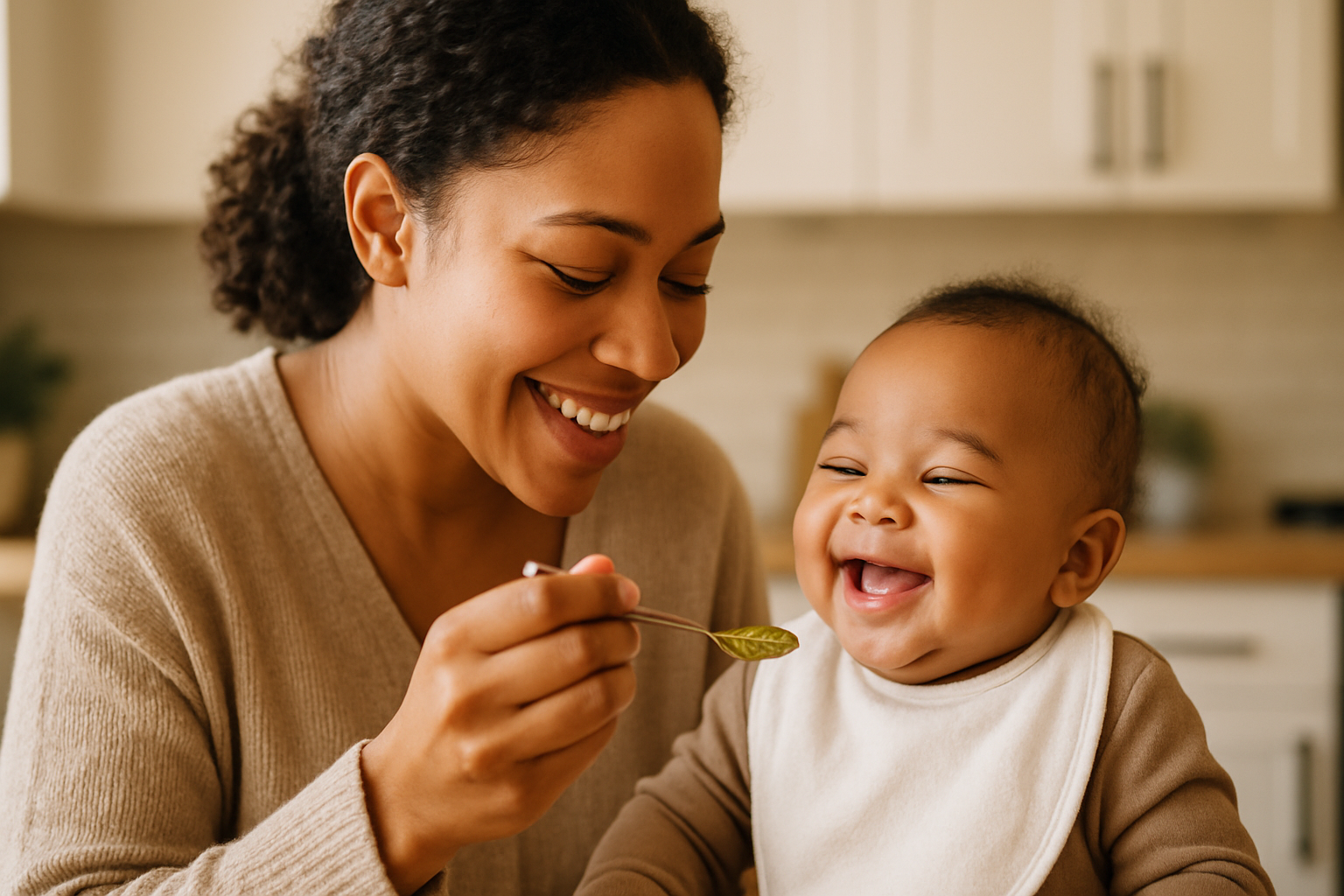
Tiny tastes and a calm pace can help make solids feel less intimidating.Some babies need time, texture play, and plenty of patience before meals click.
When should I start introducing solid foods to my baby?
Current guidance commonly recommends around six months, though opinions among pediatricians still vary. More important than the calendar are developmental signs of readiness: your baby should be able to sit with minimal support, have lost the tongue-thrust reflex that pushes food back out, and show clear interest in what you are eating at mealtimes.
What should I do when my baby refuses solid food?
The gentlest approach is to take a break and try again in a week or two — there is no harm in continuing with breast milk or formula for a bit longer. When you do try again, pick a time when your baby is happy and rested, not when she is hungry or tired. Feed breast milk or formula first so she is not starving, then offer a small taste. Keep the mood calm and low-pressure so it doesn’t become a power struggle.
What are good first solid foods for babies?
Rice cereal was long the traditional first food, but many doctors now recommend nutritionally dense options like pureed vegetables or fruit as a strong start. Banana and avocado are excellent for finger feeding once your baby has a few teeth, since both are soft and easy to mash. Introduce one new food at a time so you can watch carefully for any allergic reactions.
What signs show that a baby is ready for solid foods?
Watch for these developmental cues: the ability to sit with minimal support, losing the tongue-thrust reflex so food stays in the mouth rather than being pushed back out, and active interest at mealtimes — reaching toward your plate or leaning forward when you eat. These readiness signs are more reliable guides than age alone.
Patricia Hughes is a freelance writer and mother of four. Patricia has a Bachelor’s Degree in Elementary Education from Florida Atlantic University. She has written extensively on pregnancy, childbirth, parenting and breastfeeding. In addition, she has written about home décor and travel.
Patricia Hughes is a freelance writer and mother of four. Patricia has a Bachelor’s Degree in Elementary Education from Florida Atlantic University. She has written extensively on pregnancy, childbirth, parenting and breastfeeding. In addition, she has written about home décor and travel.

















Add Comment