









 Babies are born with the grasping reflex. From birth, your baby can grasp an object, usually your finger. You will need to put your finger against the palm of the baby’s hand to get her to grasp at it. As your baby grows, she will develop the coordination to actually pick up things and hold them.
By the age of nine months, the baby has mastered the pincher grasp. This is picking up a small object using the forefinger and the thumb. As he feeds himself, this skill will continue to improve. Once he has mastered self feeding and using the pincher grasp, he will be ready to move on to eating with utensils. This is a skill that develops between the ages of eleven and eighteen months old, depending on the baby.
When do babies start picking up objects on their own?
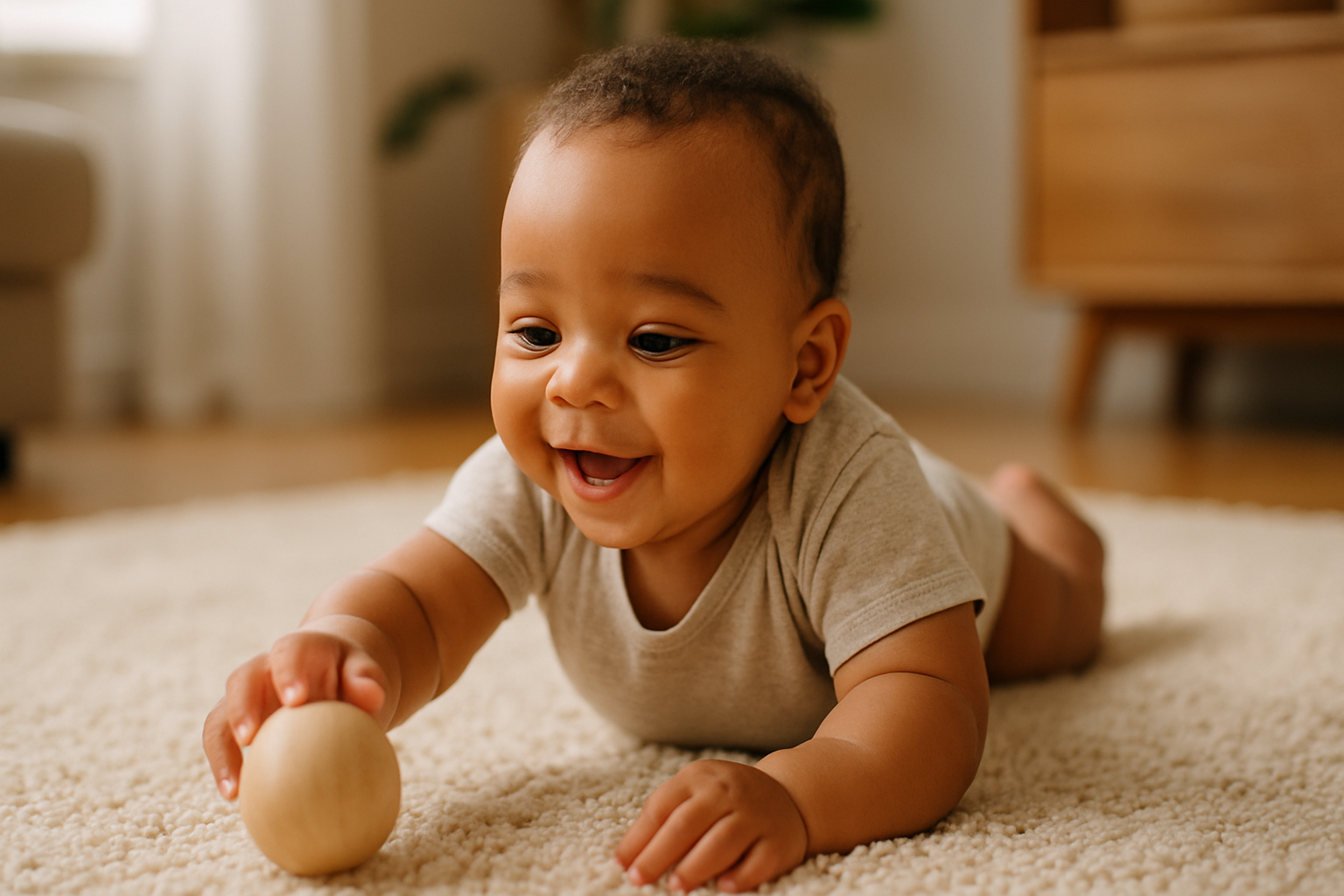
Babies are born with the grasping reflex, but it isn’t voluntary at first — they only grasp objects placed directly in their palm. Around 2 months, babies discover their own hands and start grabbing things that brush against them. By about 3 months, they begin actively swatting at nearby objects. Around 4 months is typically when a baby first picks something up intentionally, starting with larger easy-to-hold items like soft toys or rattles.
What is the pincer grasp and when does it develop?
The pincer grasp is the ability to pick up a small object using just the forefinger and thumb — a major fine motor milestone. Most babies develop this skill around 9 months of age. Before that, they use their whole hand or fist to grab food and objects. Once the pincer grasp is established and self-feeding improves, babies are typically ready to begin practicing with utensils, usually between 11 and 18 months.
How can I help my baby practice picking up objects?
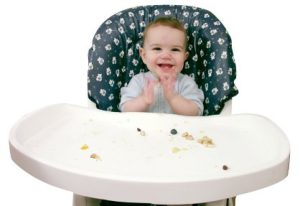
Self-feeding is one of the best natural practice opportunities — let your baby try to pick up soft finger foods even if it’s messy. Baby gyms and toy bars (attached to play mats or car seats) are great for the swatting stage around 3 months. As your baby grows, offering a variety of larger easy-to-grasp toys helps build the fine motor coordination that leads to picking up smaller objects. Keep practice sessions relaxed and playful.
What safety steps should I take when my baby starts picking things up?
Once your baby starts picking things up, everything goes straight in the mouth — so it’s time to do a careful sweep of your space. A good rule of thumb: if an object can fit inside a toilet paper roll, it’s too small and poses a choking risk. Stick to larger toys and objects designed for babies while fine motor skills are developing. Always supervise closely during floor time and mealtimes.
No part of this article may be copied or reproduced in any form without the express permission of More4Kids Inc © 2008 All Rights Reserved


Maya Bennett
Latest posts by Maya Bennett (see all)
About the author

Maya Bennett
Meet Maya Bennett Maya Bennett is a pregnancy and parenting writer and a mom of two. After navigating two very different pregnancies of her own — and years spent reading, researching, and trading stories with other expectant parents — she fell in love with helping families feel ready for what's ahead. At More4Kids, Maya turns the big questions and quiet worries of pregnancy into warm, practical guidance, from the first positive test through the tender early days with a newborn. She believes every parent-to-be deserves clear answers and a little reassurance along the way.




Add Comment