













By Elena Marsh
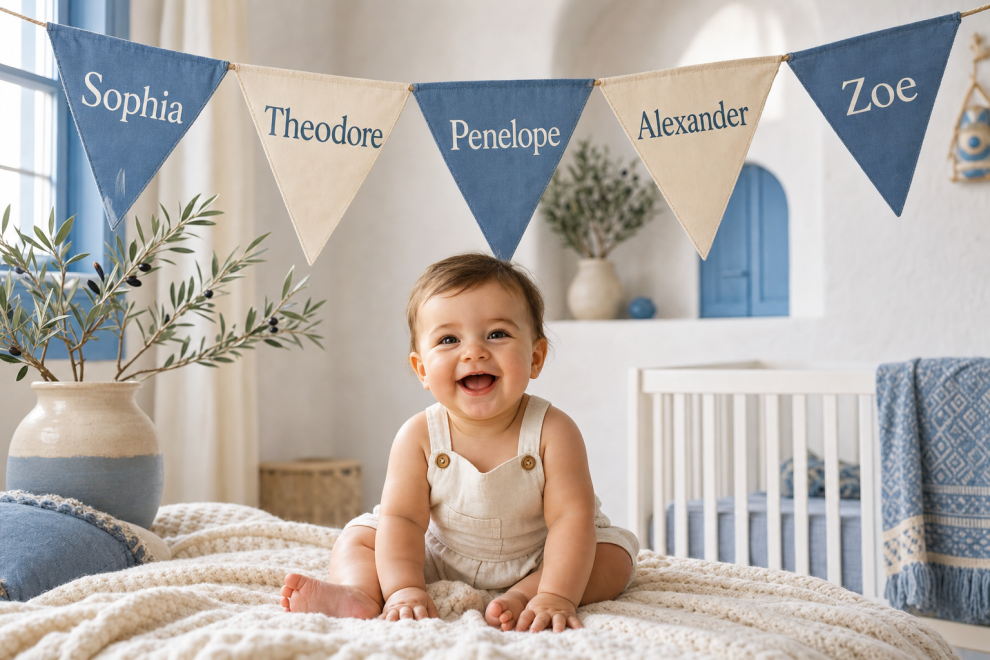
There’s a particular thrill in discovering that a name you’ve loved your whole life is much older than you ever imagined. Sophia. Theodore. Penelope. As a mom who has fallen down more baby-name rabbit holes than I’d care to admit, I keep landing back among the Greek ones, because so many of them turn out to be little doorways — into myth, into wisdom, into stories people have been telling for thousands of years. You say a name like Athena or Atlas out loud and a whole world comes with it.

Greek baby names have a way of feeling both grand and completely wearable. That mix of depth and ease is exactly why so many parents start a search and keep circling back to the greek baby names. Part of it is the meanings, which run unusually deep — wisdom, life, light, the rainbow, the moon. Part of it is the sound, all those rolling vowels and soft endings. And part of it is sheer staying power: these names have survived empires and centuries and somehow arrive on a modern American birth certificate sounding fresh, familiar, and just a little luminous.
What I love most is how many Greek names carry a story you can hand to your child along with the name itself. Some come straight from mythology, some from the New Testament, some from everyday Greek words for beautiful things. I’ve gathered 33 of my favorite greek baby names below — these greek baby names run girls first, then boys — each with its true meaning and a simple pronunciation guide, every meaning drawn from our name directory rather than from my own imagination. If you’re still casting a wide net, it’s worth browsing a broader sweep of baby names alongside these, and you can always explore the full set on our Greek origin page. But if your heart is leaning toward Greece, you’re in wonderful company.
Greek Baby Girl Names
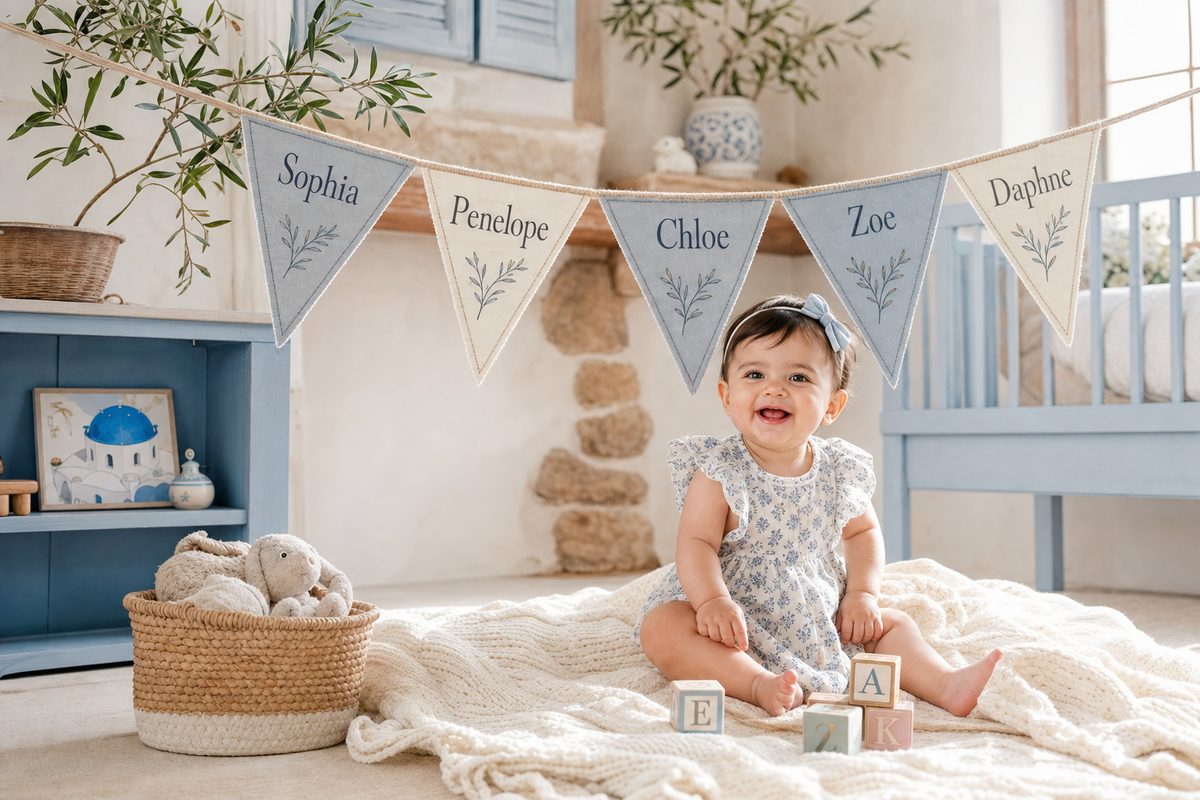
If you’re searching for greek baby girl names, you’ll find a recurring thread of wisdom, light, flowers, and goddesses. Many of the loveliest greek baby girl names come straight out of mythology or carry a meaning that feels like a tiny blessing.
Sophia (so-FEE-uh) — Meaning “wisdom.” Sophia has been a top name for years, and once you know it simply means wisdom, it’s easy to see why parents keep returning to it. It feels timeless and gently elegant, and Sophie waits inside it for everyday.
Penelope (puh-NEL-uh-pee) — Meaning “weaver,” likely from the Greek words for a bobbin and a face or voice. Penelope was the faithful, clever wife in Homer’s Odyssey, famous for weaving by day and unraveling her work by night. I’ll be honest that the exact root is debated, but the loyal, resourceful woman behind it is unforgettable. Penny is the sweetest nickname.
Chloe (KLOH-ee) — Meaning “blooming” or “young green shoot” — the first new growth of spring. Chloe was an old title for the goddess of the harvest, and that fresh, green-shoot meaning gives the name a hopeful, growing-things feeling I really love.
Zoe (ZOH-ee) — Meaning “life” — quite literally, “the living one.” Zoe might have the most joyful meaning on this entire list. It’s short, bright, and impossible to mishear, and few names say more in three little letters.
Elena (eh-LAY-nuh) — Meaning “bright, shining one” or “torch,” a flowing variant of Helen. Elena has a warm, romantic music to it, and it connects to Helen of Troy and that whole world of Greek legend. The meaning — a torch, a shining one — is lovely to wish on a daughter.
Iris (EYE-riss) — Meaning “rainbow.” Iris was the Greek goddess of the rainbow, a messenger between the gods and mortals, and the flower took its name from her. It’s crisp, vintage, and quietly radiant — a flower and a rainbow in one small word.
Athena (uh-THEE-nuh) — The name of the Greek goddess of wisdom, warfare, and crafts. Athena carries enormous presence; the city of Athens was named in her honor. Its deeper etymology is genuinely uncertain, so I won’t pretend otherwise — but as a name tied to wisdom and strength, it’s hard to beat.
Phoebe (FEE-bee) — Meaning “bright,” “radiant,” or “shining one.” Phoebe belonged to a Titaness associated with the moon, and it appears in the New Testament too, which gives it a nice blend of myth and faith. It’s playful and luminous at once.
Daphne (DAF-nee) — Meaning “laurel tree” or “bay laurel.” Daphne comes from the myth of a nymph who became a laurel tree, the very plant whose leaves crowned victors and poets in ancient Greece. It’s leafy, gentle, and a little enchanted.
Cora (KOR-uh) — Meaning “maiden” or “girl,” from the Greek kore. Cora was also a name for Persephone, the spring goddess, in the old stories. It’s short, vintage, and warmly pretty — a little maiden of a name.
Melody (MEL-oh-dee) — Meaning “song” or “musical tune,” from the Greek words for song. Melody is exactly what it sounds like, and there’s something sweet about a name that is itself a little piece of music. It feels gentle and sunny on a child.
Selena (suh-LEE-nuh) — Meaning “moon” or “moonlight,” from Selene, the Greek goddess of the moon. Selena has a soft, glowing quality, and that lunar meaning gives it a quiet, dreamy beauty. It’s romantic without being fussy.
Anastasia (an-uh-STAY-zhuh) — Meaning “resurrection” or “rising up.” Anastasia is grand and storybook-elegant, long beloved in Greek and Eastern European families, and it folds down to the friendly Ana or Stacy. The meaning carries real hope inside it.
Evangeline (ee-VAN-juh-line) — Meaning “bearer of good news,” from the Greek roots for “good” and “messenger” (the same roots behind the word gospel). Evangeline is flowing and a little old-fashioned in the best way, with Eva, Evie, or Lina tucked inside.
Ophelia (oh-FEE-lee-uh) — Meaning “help” or “aid” — one who offers assistance. Ophelia has a lyrical, literary feeling thanks to Shakespeare, but the Greek meaning beneath it is tender and giving, which I find lovely.
Calliope (kuh-LY-oh-pee) — Meaning “beautiful voice,” from the Greek words for beauty and voice. Calliope was the Muse of epic poetry, the eldest and grandest of the nine Muses. It’s a big, melodic name with the sweet nickname Callie waiting inside.
Alexandra (al-ex-AN-druh) — Meaning “defender of the people,” the feminine of Alexander. Alexandra is regal and strong, with one of the richest nickname benches around — Alex, Lexi, Sasha, or Sandra. A powerful meaning in a graceful name.
Harmony (HAR-muh-nee) — Meaning “harmony” or “concord,” from the Greek harmonia. Harmony was a goddess of accord in the old myths, and the word itself carries that sense of things fitting beautifully together. It’s a peaceful, hopeful name for a daughter.
For more inspiration beyond this list, it can help to look through a broader collection of baby girl names and notice which sounds keep pulling at you.
Greek Baby Boy Names
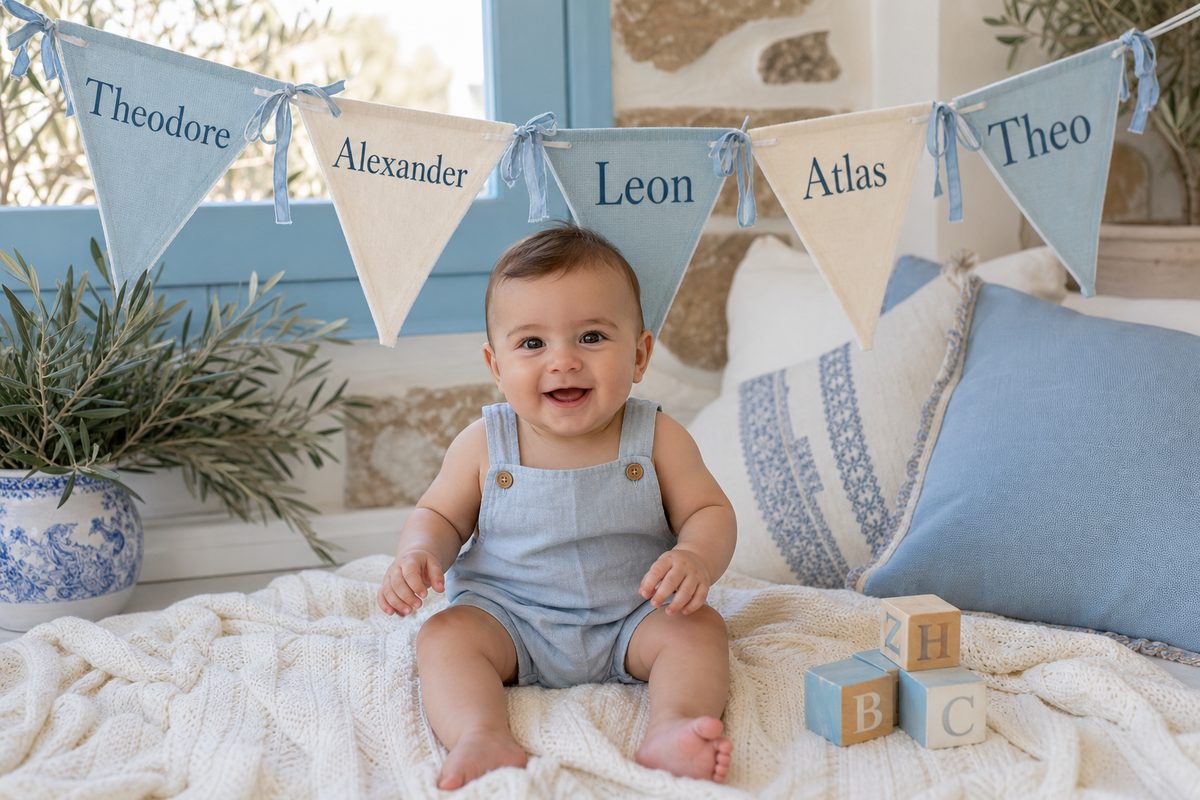
Greek baby boy names lean into a wonderful mix of gods, heroes, saints, and meanings tied to honor and faith. Some of the strongest greek baby boy names on this whole list sit right here, carrying stories that have lasted thousands of years.
Theodore (THEE-uh-dor) — Meaning “gift of God” or “divine gift.” Theodore has surged back into favor, and the warmth of that meaning is a big part of why. It gives you Theo or Teddy for the everyday, so a stately name comes with a cuddly one built in.
Alexander (al-ig-ZAN-der) — Meaning “defender of men” or “protector of the people.” Alexander carries the weight of Alexander the Great and still feels completely modern, with Alex, Xander, and Sasha all ready inside it. Few names balance grandeur and ease so well.
Sebastian (suh-BAS-chun) — Meaning “venerable” or “revered,” tied to the ancient city of Sebastia. Sebastian is rich and a little romantic, with a saint behind it and Seb or Bash for short. It sounds dignified without ever feeling stiff.
Christopher (KRIS-tuh-fer) — Meaning “bearer of Christ,” from the Greek roots for Christ and “to bear.” Christopher is a steady, beloved classic, carried by the patron saint of travelers, with the friendly Chris or Topher inside. A name that wears well at every age.
Nicholas (NIK-uh-lus) — Meaning “victory of the people,” from the Greek words for victory and people. Nicholas gave us St. Nicholas, the warm-hearted saint behind Santa Claus, and it folds down to Nick, Nico, or Cole. A strong meaning with a generous story.
Damian (DAY-mee-un) — Meaning “to tame” or “to subdue” — a tamer. Damian has a smooth, confident sound, and there’s a gentle St. Damian behind it, a healer in the old accounts. The “one who tames” meaning gives it a quiet strength.
Leon (LEE-on) — Meaning “lion.” Leon is short, strong, and instantly understood, the Greek root behind a whole pride of lion-names. It feels both vintage and current, and there’s nothing to spell out twice.
Jason (JAY-son) — Meaning “healer” or “to heal.” Jason led the Argonauts in search of the Golden Fleece, one of the great Greek adventure tales, yet the name itself feels easygoing and familiar. A hero’s story behind a friendly, everyday sound.
Atlas (AT-lus) — Meaning “to carry” or “to endure,” after the Titan who held up the heavens. Atlas has become a striking modern choice, strong and a little mythic. That “to endure” meaning gives a small boy a name with real shoulders.
Adonis (uh-DON-is) — Meaning “lord” or “master,” from an old Semitic root that Greek myth absorbed. Adonis belonged to a famously beautiful youth in the legends. It’s bold and striking, and I think it’s fair to tell a son the meaning beneath the myth is simply “lord.”
Theo (THEE-oh) — Meaning “gift of God,” from the Greek roots for God and gift. Theo works beautifully on its own or as the short form of Theodore. It’s warm, friendly, and quietly meaningful — a small name carrying a lovely thought.
Angel (AYN-jul) — Meaning “messenger” or “angel,” from the Greek angelos. Angel is tender and widely loved, especially in families who want a name with gentle, hopeful meaning right on the surface. It crosses cultures easily and needs no explaining.
Xander (ZAN-der) — Meaning “defender of the people,” a crisp short form of Alexander. Xander gives you all the strength of Alexander in a sharp, modern package. That bold “X” makes it feel current while the meaning stays ancient.
Cyrus (SY-rus) — Meaning “sun” or “far-sighted,” though the exact origin is debated. Cyrus has a warm, sunlit feeling and a stately, old-world bearing. I’ll be honest that scholars don’t fully agree on its root, but its long history and bright associations make it a distinctive pick.
Timothy (TIM-uh-thee) — Meaning “honoring God,” from the Greek roots for honor and God. Timothy is a gentle, steady classic with a New Testament saint behind it and the easy nickname Tim. The meaning is quietly beautiful — a child who honors something larger.
If a name here catches your eye, browsing a wider set of baby boy names alongside it can help you test how it feels next to your favorites.
How to Say Greek Baby Names with Confidence
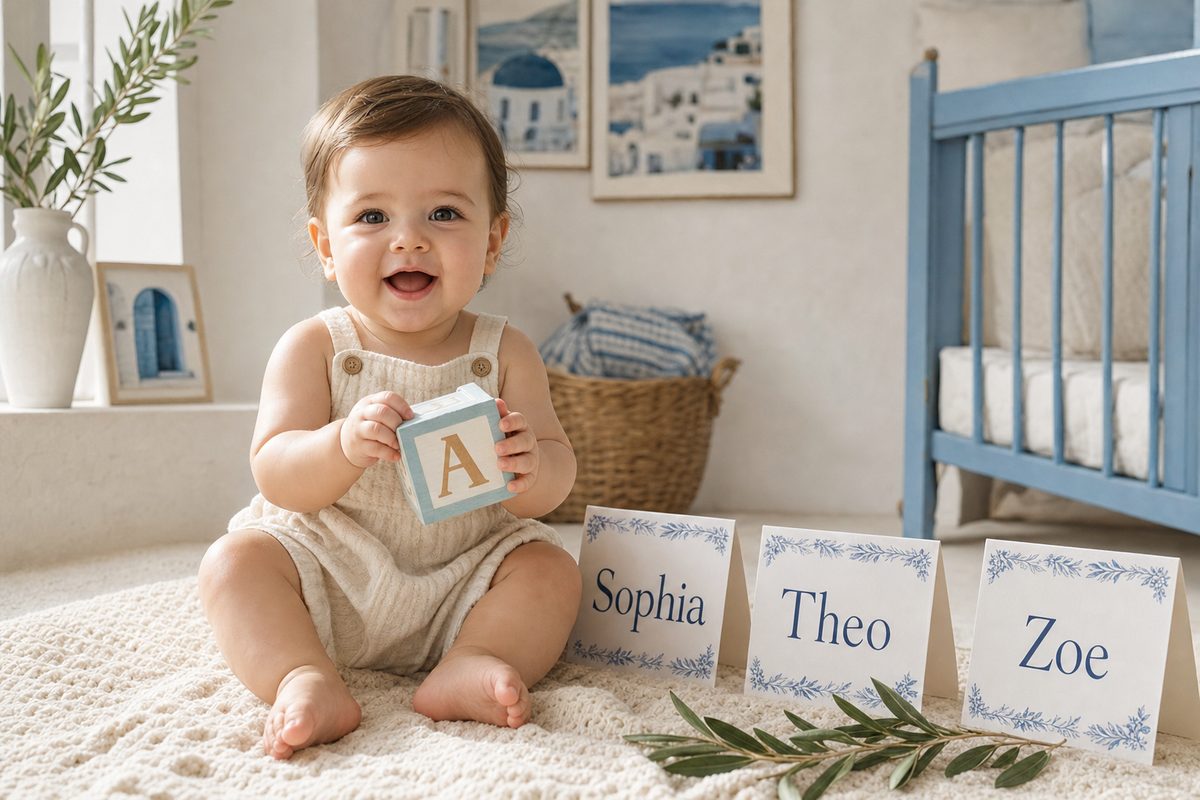
The good news about greek baby names is that most of them have already settled comfortably into English, so they’re friendly to say. For deeper reference, Behind the Name keeps audio clips for many of the names on this list. Here are the few patterns that helped me most.
- “ph” sounds like “f.” It’s how Phoebe is “FEE-bee” and Sophia has that soft middle. This one combination unlocks a lot of Greek names at a glance.
- “ch” often sounds like “k.” That’s why Christopher and Chloe open with a hard “k” sound, not the “ch” of “cheese.”
- The “e” at the end is usually said. Names like Penelope, Chloe, Zoe, and Calliope end on a sounded “ee,” not a silent “e” — so it’s “puh-NEL-uh-pee,” not “Penelop.”
- “y” inside a name often sounds like a short “i.” It’s why Cyrus is “SY-rus” — that internal “y” carries the vowel.
- Lean into the open vowels. Greek names love clear, rounded vowel sounds. Saying them a touch more openly — Theo, Leon, Cora — is usually closer to right than swallowing the ends.
My honest advice: when in doubt, listen. Hearing a name spoken once or twice does more than any written guide, including mine. It’s the quickest way to fall for the greek baby names that look longest on paper.
Choosing a Greek Name: What to Consider

Picking any name is part heart, part practicality, and greek baby names add a couple of gentle things worth weighing. A few questions I’d sit with:
Does the meaning or story speak to you? This is where greek baby names really shine — wisdom, life, the rainbow, a defender of the people. If a particular meaning or myth makes your chest feel a little warm, that’s worth paying attention to. Your child gets to grow up inside that story.
How does it flow with your last name and a middle name? Some Greek first names sing next to a more familiar middle name — think Theodore James or Sophia Rose — which gives your child a built-in fallback if they ever want one. Say the whole name out loud a few times; your ear will tell you a lot.
Is there a family or heritage connection? Many families choose a Greek name to honor their roots, a grandparent, or a baptismal tradition, and that thread of continuity can mean a great deal down the line. If you have Greek ancestry, this is a beautiful way to carry it forward.
Will it travel well? Most greek baby names are easy for English speakers, but a few of the longer ones — Anastasia, Calliope — are worth saying around the grandparents first. Happily, almost all of them come with a friendly nickname tucked inside, which makes even the grandest choices feel approachable from day one.
Frequently Asked Questions
What are the most popular Greek baby names?
Names like Sophia, Theodore, Penelope, Chloe, Zoe, and Alexander are among the most widely recognized and chosen greek baby names, and several of these greek baby names rank high on U.S. baby-name lists right now. They tend to be the Greek names American parents feel most confident saying out loud.
Are Greek baby names hard to pronounce?
Most are surprisingly friendly. Once you learn a couple of patterns — “ph” sounds like “f,” and a final “e” is usually said, as in Zoe and Penelope — the greek baby names on this list become very approachable, even the longer ones.
What Greek names come from mythology?
Many of the loveliest do. Athena, Selena, Iris, Daphne, Calliope, Atlas, and Jason all trace back to Greek gods, nymphs, Muses, or heroes, which means each one comes with a story you can share with your child as they grow.
Do Greek baby names come with nicknames?
Almost always, and that’s part of their charm. Theodore gives you Theo or Teddy, Alexandra gives you Alex or Lexi, Penelope gives you Penny, and Anastasia gives you Ana — so a longer, more formal name still has an easy everyday version waiting inside it.
Where do the meanings of Greek names come from?
Most Greek names trace back to ancient Greek words, to mythology, or to figures in the New Testament. Each meaning on this list is drawn from our name directory, and where a meaning is genuinely uncertain — as with Athena or Penelope — I’ve said so rather than guessing.
A Warm Send-Off
However you arrive at it, choosing your baby’s name is one of the first quiet conversations you’ll have about who this little person might be. Greek baby names give you so much to draw on, and the greek baby names on this list are only a starting point — wisdom and life, gods and heroes, the moon and the rainbow, and thousands of years of families who said these same luminous sounds with love. Don’t let a long spelling scare you off a name your heart keeps returning to; a name is learned quickly and carried for a lifetime. Take your time, say your favorites out loud, and trust that you’ll know it when you hear it. Whatever you choose, your little one is going to wear it beautifully.
Related Articles

Elena Marsh
Elena Marsh is a writer, historian, and lover of names and where they come from. A mom of two, she went down the rabbit hole of name meanings and the cultures and stories behind them, and now writes warm, parent-to-parent guides to baby names from around the world. She researches and sources every meaning, and writes as a curious fellow parent rather than a credentialed linguist.