







By Sophia Richards
Summer has a way of arriving full of possibility and then, somewhere around week two, turning into a long series of questions about what to do next.
The promised adventures are a little too ambitious. The screen time has crept up. Someone is bored. Someone else is too hot.
As a mom of three, I have lived this many times. The summer activities for kids that actually work in my house are not the grand ones I imagined in May — they are the small, manageable things that give us a way to spend an hour well, without a lot of planning or supplies.
This list is for that. For the afternoon that needs a shape, the morning that is too hot to go anywhere, and the week that has drifted a little too close to everyone staying on their own screen.
Outdoor Summer Activities for Kids
Table of Contents
When the weather cooperates, getting outside is almost always the best option. You do not need an expensive destination — your yard, a sidewalk, or a nearby park is enough.
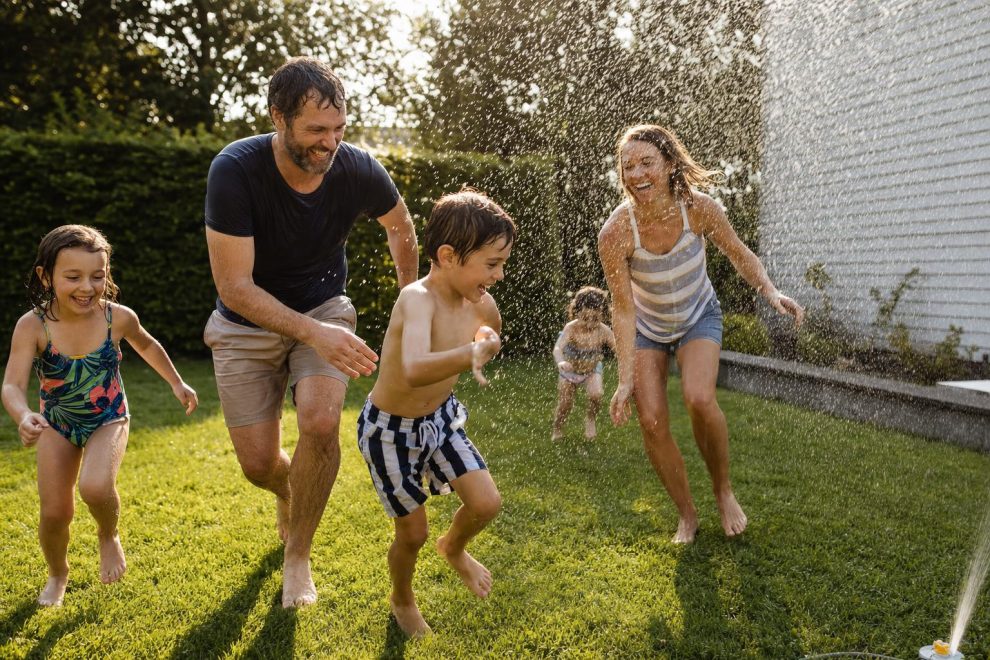
**Water play.** A sprinkler, a bin of water, water balloons, or even a hose on a hot afternoon is endlessly replayable for most kids. Add cups, funnels, and kitchen tools and you have an hour's worth of exploration.
**Sidewalk chalk.** This one sounds too simple and works anyway. A big pile of chalk and the instruction to "cover the whole driveway" will keep many kids busy longer than you expect.
**Nature scavenger hunt.** Give kids a list of things to find (a smooth rock, something yellow, an insect, a seed), or let them make up the list themselves. A backyard walk becomes a real outing.
**Backyard obstacle course.** Hula hoops, chalk lines, a jump rope, and a blanket to crawl under. Give kids the supplies and a start/finish line and let them design the rest.
**Ice cube activities.** Freeze small objects, food coloring, or herbs in ice cubes and let kids melt them with water on a warm afternoon. It is cooling and genuinely engaging.
The American Academy of Pediatrics notes that outdoor play supports children's physical development, social skills, and creativity in ways that structured indoor activities often do not. Their guidance on the power of play is a useful reminder that unstructured time outside is not wasted time — it is valuable development.
Creative Indoor Summer Activities for Kids
Hot days, rainy days, or the two o'clock hour when going outside is genuinely miserable — these are the moments for a quieter indoor lane.
**Kitchen science.** Baking soda and vinegar is still a classic. So is making slime, cornstarch and water oobleck, or a simple lemon juice invisible ink experiment. You probably already have most of the supplies.
**Artist's morning.** Set out a variety of materials — watercolors, old magazines for collage, clay, chalk, markers — and let kids create without a specific project in mind. Rotate materials day by day.
**Blanket fort.** The setup is half the fun. Once it is built, it becomes a reading nook, a puppet theater, or a place to listen to an audiobook together.
**Cooking project.** An age-appropriate kitchen task that produces something edible is almost always a win: no-bake cookies, fruit skewers, homemade pizza dough, or decorated crackers. The math and science are happening without anyone mentioning them.
**Card games and board games.** A summer is a good time to teach a new card game and actually have enough slow mornings to play it. Go Fish and Crazy Eights for younger kids; Skip-Bo or Uno for older ones.
I sometimes structure the mid-morning as "project time" so there is a natural anchor in the day. In my house, knowing there is a project coming keeps the pre-project hour calmer.

Low-Key Community Summer Activities for Kids
You do not need to travel far or spend much.
**Library summer reading program.** Most public libraries run a free summer reading challenge. The structure of small goals and check-ins tends to keep kids reading through July and August.
**Farmers market visit.** Let each child choose one fruit or vegetable they have never tried. Make it a ritual rather than a chore.
**Local park with a new challenge.** Go to a park you do not usually use, or set a personal challenge at the familiar one (make it to the top of the climbing wall, walk the perimeter twice, etc.).
**Free museum days.** Many children's museums and natural history museums offer free or reduced admission on specific days. Worth a quick search for your area.
**Neighborhood kid project.** Kids who are old enough can run a simple lemonade stand, paint rocks for a neighborhood rock garden, or plan a small gathering for the street. The logistics are the learning.
For a broader menu of family outings and adventures that mix well with summer, the More4Kids guide to fun summer family activities has ideas that work well as occasional bigger days alongside these smaller-scale anchors.
Keeping the Summer From Going Sideways
Summer activities for kids work best when the day has at least one anchor. Without any structure, the hours can blur, screens fill the gap, and everyone ends up a little cranky and understimulated.
A summer routine with flexible anchors does not have to be a schedule. It can be as simple as: outdoor time in the morning, a project or creative lane in the afternoon, and something quiet before dinner.
The CDC's guidelines on physical activity for children recommend that kids ages 6–17 get at least 60 minutes of moderate-to-vigorous physical activity most days. Summer, with its unstructured days, is actually the easiest time to hit that — if outdoor play is treated as a regular part of the day rather than an afterthought.
The science of play time is a useful read for understanding why unstructured, child-directed play matters so much for development — and why it is worth protecting even when screens are easier.

A Simple Idea for a Summer Activity Menu
One thing that has helped in my family: a small summer menu kept on the fridge.
Three columns: Outside, Inside, Away.
Each column has five things that work for your family specifically. When someone says "I'm bored," the menu is the answer. The child points to something on the list. You say yes or offer an alternative from the same column.
This is not a schedule. It is a decision tool. It reduces the open-ended frustration of "I don't know what to do" without requiring the parent to generate an idea on demand for the fifteenth time in a day.
Summer with kids is better when the plan lives somewhere other than your head.
The Real Goal of Summer Activities for Kids
The point of summer activities for kids is not to keep them entertained every moment. It is to give the day enough shape that connection, creativity, and real play can happen — and screens fill a reasonable place instead of the whole thing.
Some summers are easier than others. Some kids need more structure; some thrive with almost none. As a parent, you are the one who knows the difference.
The activities on this list are starting points, not prescriptions. Take what works. Leave what does not. Add one anchor, see how the day goes, and adjust.
That is really all a summer needs.
Related Articles

Meet Sophia Richards Sophia Richards is an early childhood educator, passionate writer, and the proud mom of three energetic kids. With a degree in Education and over a decade of hands-on classroom experience, Sophia bridges the gap between professional teaching strategies and everyday family life. At More4Kids, she translates complex child development concepts into practical, actionable parenting tips that families can use at home.
Whether she is sharing positive reinforcement techniques, educational crafts, or honest reflections on the chaos of raising three children under one roof, Sophia’s goal is to empower parents to foster resilience and joy in their kids. When she isn’t writing or lesson planning, you can find her organizing neighborhood scavenger hunts or trying out new kid-friendly recipes.
Areas of Expertise: Early Childhood Education, Positive Parenting, Sibling Dynamics, Educational Play, Family Wellness.





Add Comment