











 by Stacey Schifferdecker
Experts estimate that by the year 2010, almost 50 percent of children in North America will be overweight. We know why – kids gain weight for the same reasons adults gain weight: too much food and not enough exercise. And while we are probably all behind the drives to remove junk food and soda vending machines from our schools, are we similarly vigilant about the food in our homes?
Separate Snacks from Treats
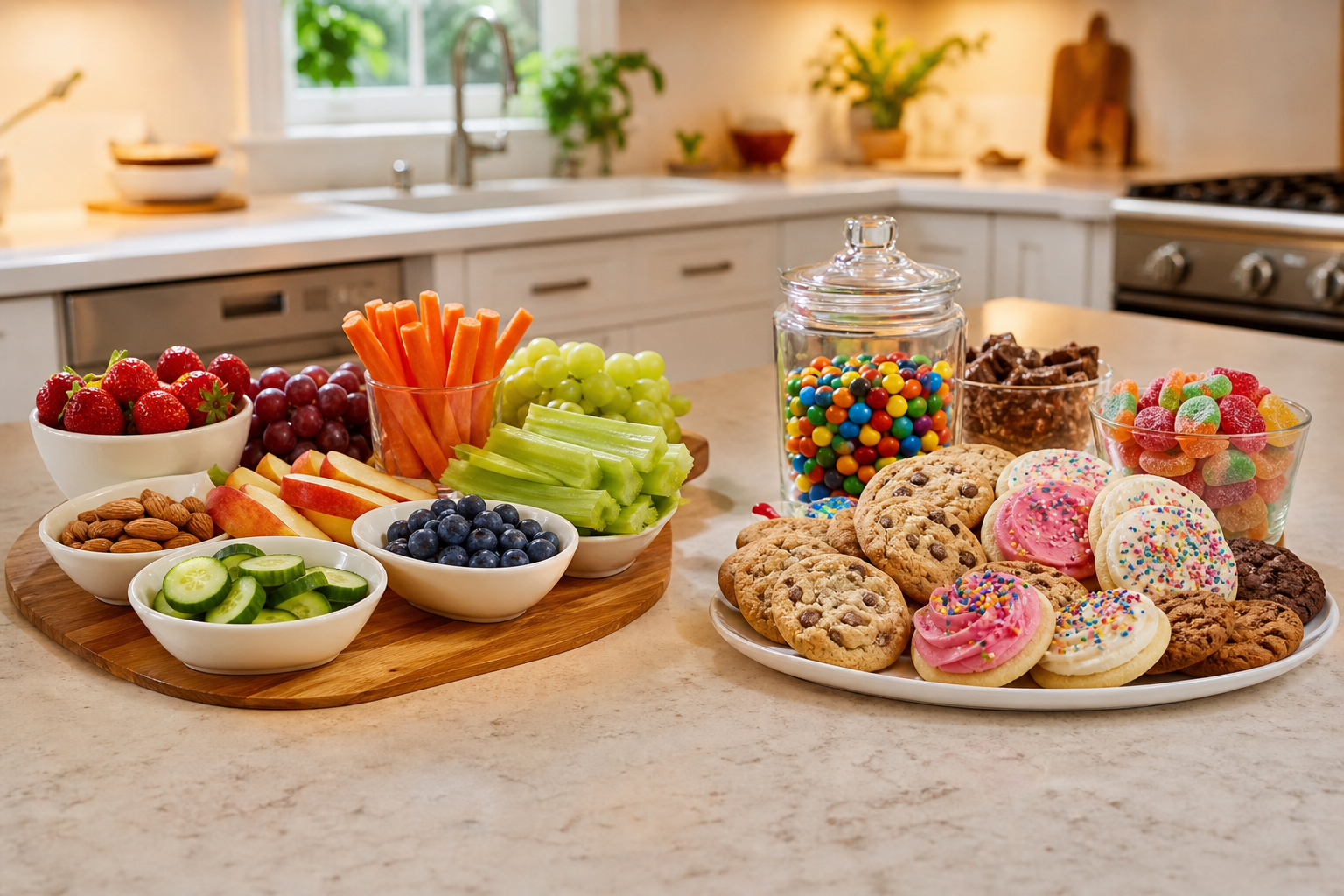
A dietician once spoke at my children’s preschool and explained to us the very logical distinction she makes for her children between “snacks” and “treats.” Snacks are everyday tide-your-kids-over-to-the-next meal items. Snacks need to be part of every child’s balanced diet. After all, kids need to eat every few hours. At my kid’s elementary school, lunch begins at 10:45, so by the time school gets out at 2:45, the kids are ravenous. They need a snack so they can concentrate on their homework and have some energy to play outside.
Treats, on the other hand, are for special times. Birthday parties. Report card days. Finally finished the science project. Treats are special precisely because they are rare. So, what makes a good snack…..
What Makes a Good Snack?
If we think of snacks as a mini-meal, it is easier to move away from junk food as a snack. And by providing a variety of healthy snacks, you are still giving your kids choices about what they eat. Good choices include
by Stacey Schifferdecker
Experts estimate that by the year 2010, almost 50 percent of children in North America will be overweight. We know why – kids gain weight for the same reasons adults gain weight: too much food and not enough exercise. And while we are probably all behind the drives to remove junk food and soda vending machines from our schools, are we similarly vigilant about the food in our homes?
Separate Snacks from Treats
A dietician once spoke at my children’s preschool and explained to us the very logical distinction she makes for her children between “snacks” and “treats.” Snacks are everyday tide-your-kids-over-to-the-next meal items. Snacks need to be part of every child’s balanced diet. After all, kids need to eat every few hours. At my kid’s elementary school, lunch begins at 10:45, so by the time school gets out at 2:45, the kids are ravenous. They need a snack so they can concentrate on their homework and have some energy to play outside.
Treats, on the other hand, are for special times. Birthday parties. Report card days. Finally finished the science project. Treats are special precisely because they are rare. So, what makes a good snack…..
What Makes a Good Snack?
If we think of snacks as a mini-meal, it is easier to move away from junk food as a snack. And by providing a variety of healthy snacks, you are still giving your kids choices about what they eat. Good choices include
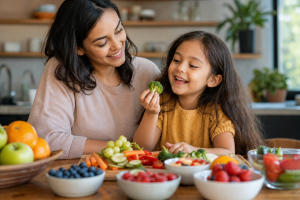
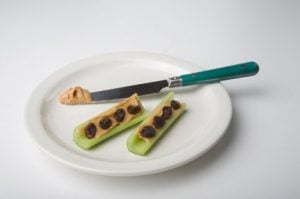
- Fruit – especially if you cut it up and provide some dip. Apple pieces dipped in melted peanut butter are a favorite snack at my house that also provides some protein. Don’t have any dip? Cut the fruit up anyway and let the kids use toothpicks to eat it.
- Vegetables and dip. Even kids who don’t like cooked vegetables often enjoy raw mini-carrots, sugar snap peas, bell pepper slices, cherry tomatoes, or broccoli – especially if dip is available.
- Yogurt. Try freezing the yogurt-in-a-tube. It’s less messy and gives the kids an almost-ice cream snack
- Cheese. Cubes, sticks, or slices. Melted on a tortilla to be a quesadilla. Melted on an English muffin or bagel as a min-pizza. Eaten alone or with crackers. Kids usually love cheese. Try the low-fat variety if you think you can get away with it (my kids can always tell).
- Smoothies. Mix and match yogurt flavors and frozen fruit to see what flavors everyone likes best.
- Pretzels and baked chips are an easy grab-n-go snack.
- Mini-sandwiches, whether on whole-grain bread or tortillas. Spread on peanut butter or layer on some meat for a protein-filled snack.
- High-fructose corn syrup (just another word for sugar), especially if it is one of the first three ingredients
- Partially-hydrogenated oils (source of trans fat)
- Anything with ingredients that have more than three syllables (too processed)
What is the difference between a snack and a treat for kids?
Snacks are everyday nutrition that bridges the gap between meals — fruit, vegetables, cheese, yogurt, smoothies. Treats are for special occasions: birthday parties, report card days, or a real celebration. Treats stay meaningful precisely because they are rare. When everything is a treat, nothing feels special and healthy eating habits do not take root.
What are some good healthy snack ideas for kids?
Great options include cut fruit with dip (apple slices with peanut butter are a favorite), raw veggies like mini-carrots, snap peas, or bell pepper slices, yogurt (try freezing yogurt tubes for an almost-ice-cream treat), cheese in any form, smoothies blended from yogurt and frozen fruit, pretzels or baked chips, and mini whole-grain sandwiches with peanut butter or deli meat.
What ingredients should I avoid in packaged snacks for kids?
Check the label and avoid high-fructose corn syrup (especially if it is among the first three ingredients), partially-hydrogenated oils, which are a source of trans fat, and anything with a long list of multi-syllable ingredients — a reliable sign the food is heavily processed with little real nutritional value.
How do I set up a healthy snacking system at home?
Designate a specific shelf in your refrigerator or pantry as the snack area and stock it with pre-approved options. Let your kids know they can help themselves to anything from that area without asking — that independence reduces the appeal of sneaking less healthy foods and makes healthy eating feel normal rather than restricted.

Stacey Schifferdecker