













 It’s a cliché, but like many clichés, it’s been oft-repeated because it’s true: Breakfast really is the most important meal of the day, especially for kids. During the night, your body uses energy you have stored up during the day to keep your heart beating, your blood flowing, your lungs working, etc. By morning, you need some fuel to get your brains and body started. That fuel comes in the form of blood sugar, also called glucose.
Breakfast offers many specific benefits:
• Helps kids learn and concentrate. Children who eat breakfast do better on standardized tests and are more alert and creative.
• Helps with weight control. As many as 15% of children are obese and the numbers increase dramatically every year. Children who skip breakfast are more likely to be overweight than children who eat breakfast.
• Improves nutrition levels. Even a breakfast of cold cereal and milk can provide calcium, riboflavin, iron, and other nutrients. In addition, children who eat breakfast are more likely to get the five servings of fruit nutritionists recommend each day than children who don’t eat breakfast.
Best Foods for Breakfast
So what are the best foods for breakfast? An ideal breakfast includes foods that are
• Low in sugar
• High in fiber
• High in protein
• High in complex carbohydrates
The carbohydrates convert to fuel quickly, giving your brain and body energy to start the day, while the protein gives you a slow release of energy that keeps you going all the way to lunch.
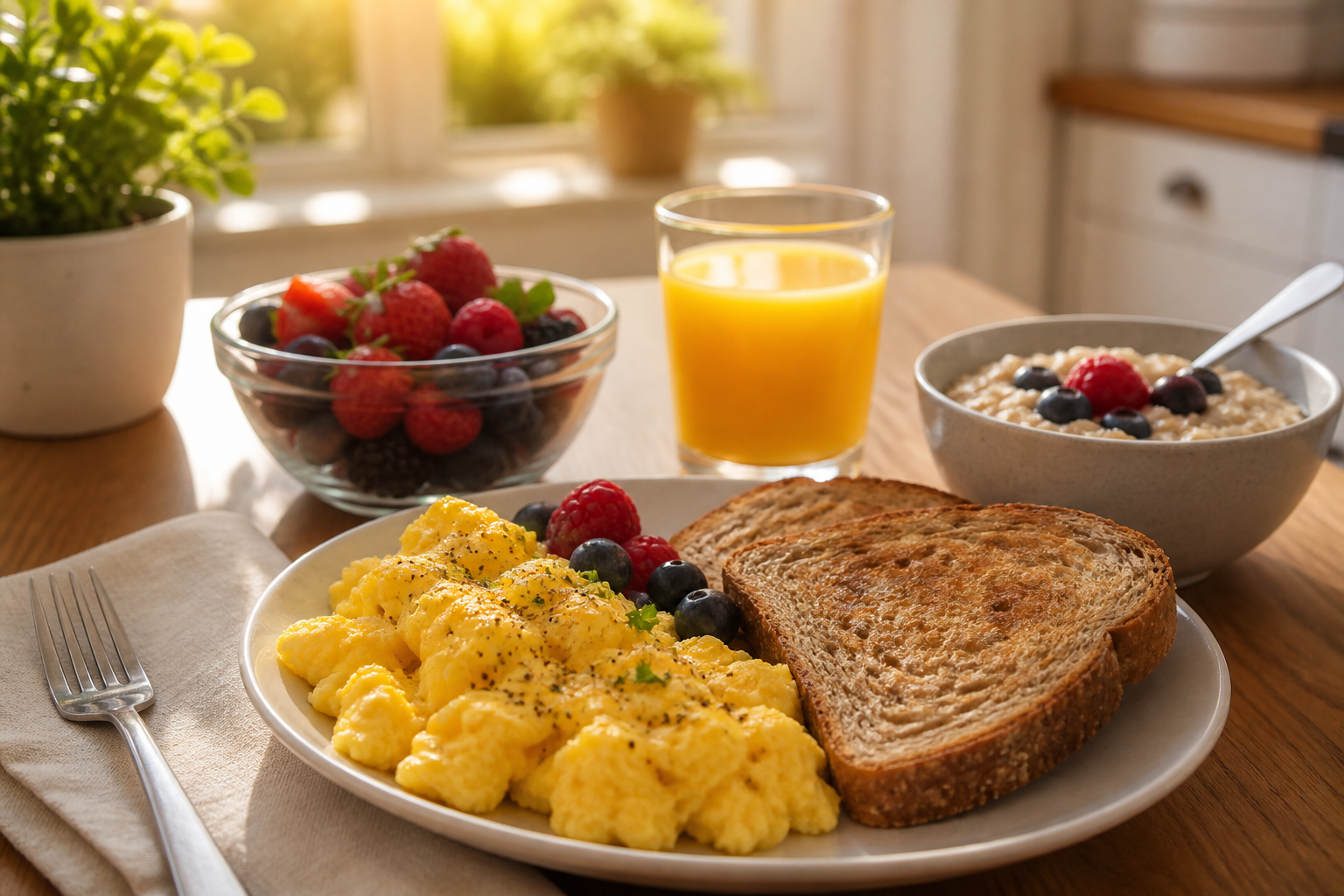
Good breakfast choices include
• Oatmeal
• Non-sugary, high-fiber cereal
• Eggs
• Whole-grain bread or bagels
• Fruit
• Yogurt
• Cheese
• Peanut butter
If your child isn’t a breakfast eater or you just run out of time in the morning, it helps to keep a stash of quick breakfast foods around that your child can eat quickly on the way to school, such as hard-boiled eggs or string cheese. Kids who don’t like breakfast may prefer more non-traditional foods, such as a peanut butter sandwich or a slice of cold pizza. Remember, any breakfast is better than no breakfast.
Why is breakfast so important for kids?
During the night, the body uses stored energy to keep everything running, so by morning kids genuinely need fuel to get their brains and bodies going. Children who eat breakfast do better on standardized tests, are more alert and creative, are less likely to be overweight, and tend to get better overall nutrition throughout the day.
What are the best breakfast foods for kids?
An ideal breakfast combines foods that are low in sugar, high in fiber, high in protein, and rich in complex carbohydrates. Good choices include oatmeal, eggs, whole-grain bread or bagels, fruit, yogurt, cheese, peanut butter, and non-sugary high-fiber cereal. The carbohydrates give a quick energy boost while protein provides a slow, steady release that lasts until lunch.
What if my child doesn’t like breakfast or we don’t have time in the morning?
Keep a stash of grab-and-go options ready: hard-boiled eggs, string cheese, or a peanut butter sandwich all travel well. Kids who resist traditional breakfast foods may do better with non-traditional choices like a slice of cold pizza. The key is that any breakfast is better than no breakfast — even something small helps fuel their morning.
Does skipping breakfast affect a child’s weight?
Yes. Children who skip breakfast are more likely to be overweight than those who eat in the morning. Eating breakfast helps regulate hunger through the day and supports better food choices overall. Since as many as 15% of children are obese, building a breakfast habit early is one of the simpler things parents can do to protect long-term health.

Latest posts by More4kids (see all)
- The Best Bedtime Stories for Kids, Grouped by Age - September 2
- Kids Jokes and Humor - August 27
- Parenting Teens: Helping Your Teenager Make Good Decisions - August 27