














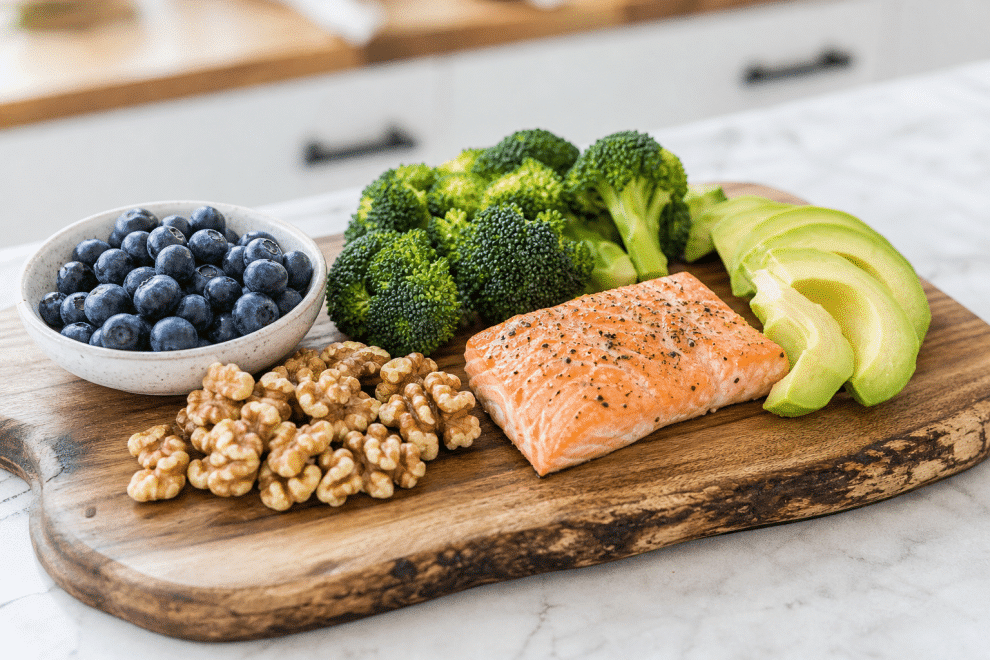

 Good nutrition does more than feed your children’s bodies—it also feeds their brains. Eating the right nutrients helps children’s brains develop and grow so that they can think more clearly and handle stress better. For example, a study of 200 students found that eating bananas for breakfast on the day of an exam helped the students stay more alert, while also having the right nutrients in their body.
 - Carbohydrates
- Protein and amino acids
- Fats and fatty acids
- Vitamins and minerals
- Phytonutrients
- Water
|
Vitamin A
|
Protects the brain from toxins and pollution
|
Dairy, meat, fish, eggs fruit, and vegetables
|
|
Vitamin E
|
Protects the brain from toxins and pollution
|
Nuts and seeds and their oils
|
|
Vitamin C
|
Turns food into mental energy
|
Kiwi and citrus fruit, berries, green vegetables, tomatoes and bell peppers
|
|
B vitamins
|
Produces brain neurotransmitters (messengers)
|
Whole grains, eggs, green vegetables, brown rice, meat, fish, legumes, nuts and seeds
|
|
Calcium
|
Relaxes nerve and muscle cells
|
Dairy products, almonds, apricots, seeds, sardines and green leafy vegetables
|
|
Magnesium
|
Relaxes nerve and muscle cells
|
Soybeans, whole grains, nuts, dried fruit, green leafy vegetables and meat
|
|
Choline
|
Improves memory and thought processes
|
Egg yolk, sardines, liver, nuts, legumes and grains
|
|
Zinc
|
Improves memory and brain function and makes the brain-calming chemical serotonin
|
Dark turkey meat, shellfish, beans and whole grains
|
|
Boron
|
Improves memory, attention, and mental alertness
|
Nuts, apples, broccoli, peas, grapes and legumes
|
|
Iron
|
Improves concentration, increases IQ scores
|
Red meat, molasses, cocoa, parsley, eggs, legumes, green vegetables, liver, shellfish and fortified breakfast cereals
|
|
Selenium
|
Protects the brain from heavy metals such as lead
|
Whole grains, cereals, tuna, shellfish, liver, dairy products and eggs
|
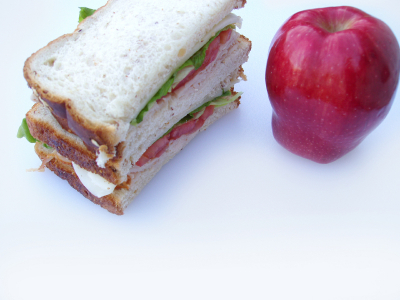 While it is best for your children to get their nutrients from food, you can also give them a multi-vitamin to fill in any gaps in their diet.
What nutrients does my child’s brain need to develop properly?
Table of Contents
The brain relies on six key nutrient groups: complex carbohydrates for steady energy, protein and amino acids for brain chemistry and emotions, healthy fats (especially omega-3 and omega-6) because 60 percent of the brain is made of fat, vitamins and minerals including B vitamins, zinc, iron, and choline, phytonutrients from colorful fruits and vegetables that protect brain cells from damage, and water to keep brain cells hydrated and functioning at their best.
Are fats actually good for my child’s brain?
Yes — healthy fats are essential for brain development. The brain is composed of 60 percent fat, which must come from the diet. The best fats are long-chain polyunsaturated fatty acids, specifically omega-3 and omega-6. Omega-3 fats are found in oily fish like tuna and salmon, eggs, and plants such as flaxseed. Omega-6 fats come from nuts and seeds as well as corn, safflower, and sunflower oils. What you want to limit are the wrong kinds of fats, not healthy fats overall.
How does sugar affect my child’s ability to learn?
Simple sugars — found in candy and baked goods — disrupt blood sugar levels, which makes learning more erratic and can leave children feeling fidgety and irritable. Complex carbohydrates are a much better fuel source: whole-grain bread, potatoes, legumes, whole-wheat pasta, brown rice, fruits, and vegetables all provide long-term, sustained energy to the brain without the highs and crashes that simple sugars cause.
Which vitamins and minerals matter most for a child’s brain?
Several stand out. Iron improves concentration and is linked to higher IQ scores. Zinc supports memory, overall brain function, and the production of the calming chemical serotonin. B vitamins help produce the neurotransmitters the brain uses to send messages. Choline (found in egg yolk, sardines, and legumes) improves memory and thought processes. Vitamins A, C, and E help protect the brain from toxins and pollution. If your child’s diet has gaps, a daily multivitamin can help fill them in.
What are easy brain-healthy foods I can add to my child’s meals?
Focus on variety and color. Oily fish like tuna or salmon provide omega-3 fats. Eggs supply protein, choline, and healthy fats in one go. Whole grains at breakfast (instead of sugary cereals) give the brain steady fuel throughout the school day. Colorful fruits and vegetables — red bell peppers, dark leafy greens, and purple grapes — are rich in phytonutrients that protect brain cells. Nuts and seeds add zinc, omega-6 fats, and vitamin E. Small, consistent choices add up to meaningful support for your child’s growing brain.
No part of this article may be copied or reproduced in any form without the express permission of More4Kids ©





Add Comment