














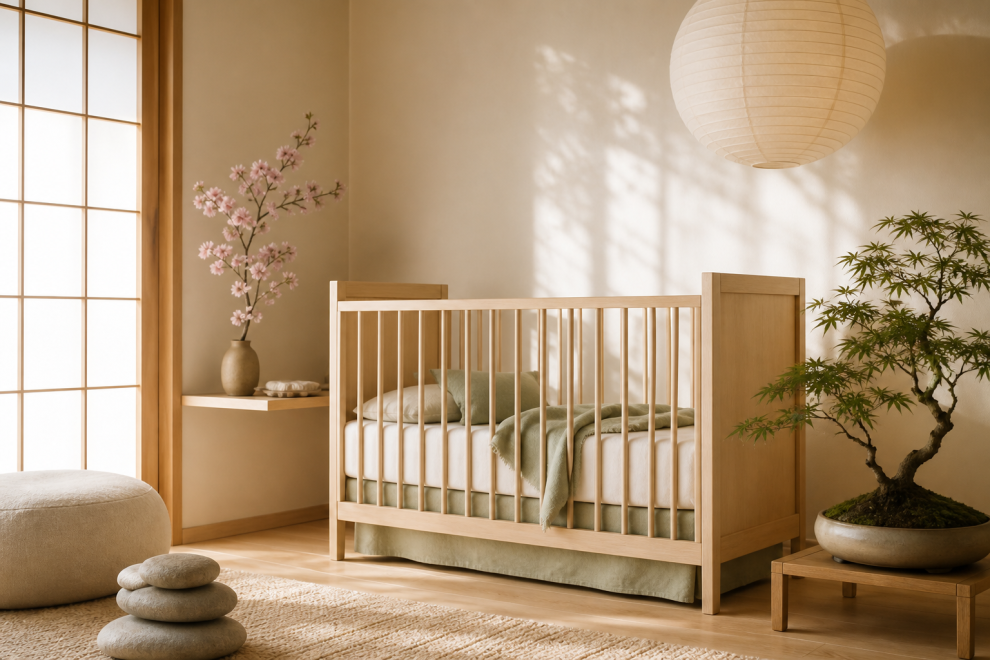
If you’ve caught yourself saying Japanese boy names out loud just to hear how they sound, you’re in lovely company. So many of us are drawn to them, and it’s easy to understand why — they tend to be short, strong, and quietly beautiful, with sounds that feel at home almost anywhere in the world. Here are more than 60 of my favorites, a little about how their meanings really work (there’s more to it than most lists let on), and a tap-to-listen clip on every name so you can hear it before you fall for it.

Each name links to its full page in our baby names directory — meaning, origin, popularity, and audio all in one place. You can wander the whole Japanese origin hub any time you like, too.
In this guide
- How Japanese boy names really work
- Names from nature
- Strong, brave-hearted names
- Short and modern
- Timeless classics
- By the meaning you love
- A little about Japanese naming
- Names that pair well with siblings
- Are they popular here, too?
- Why they travel so easily
- Choosing with care
- Saying them out loud
- Questions other parents ask
How Japanese boy names really work
Here’s the part most lists skip, and it’s the part that makes these names so special: the meaning lives in the kanji, the written characters, not just the sound. Take Haru — write it one way (春) and it means “spring,” write it another (陽) and it means “sun.” Same gentle name, two different little wishes tucked inside. That’s why I give you an honest reading for each name and tell you when there’s more than one, instead of pretending there’s a single right answer.
It’s a tender thing, really. Parents in Japan often choose the characters as carefully as the sound, picking the qualities they hope their son grows into. You don’t need to read a word of Japanese to love these names — but knowing the meaning behind one can make the choice feel like it means even more.
Names from nature
Some of the loveliest Japanese boy names come straight from the natural world — grounded, calm, and never out of style:
- Kai — most often “sea” (海); also “shell.” Easy for anyone to say, anywhere.
- Ren — “lotus” (蓮), the flower that rises clean out of the mud; sometimes “love.”
- Haru — “spring” (春) or “sun” (陽); warm and hopeful, like the season.
- Riku — “land” (陸); steady and sure-footed.
- Sora — “sky” (空); wide open and free.
- Ryu — “dragon” (竜); a little bit of magic and a lot of strength.
Strong, brave-hearted names
If you picture your boy as a bit of a force of nature, these Japanese boy names carry real backbone — and a few will feel familiar from films your family already loves:
- Kenji — “strong, healthy” (健) and “second son”; sturdy and kind all at once.
- Kenzo — “strong and wise”; sleek, with a bit of polish.
- Raiden — “thunder and lightning” (雷電), and the name of a thunder god, no less.
- Ronin — a “masterless samurai” (浪人); independent, with a quiet cool to it.
- Hanzo — carried by the legendary ninja Hattori Hanzō; bold and wonderfully rare.
- Akio — “bright, glorious man” (昭夫); warm and confident.
Short and modern
If you love a name that’s quick to say and quick to write — the kind that fits on a tiny backpack tag — these short Japanese boy names are little gems:
- Ryo — “refreshing, cool” (涼); like a breeze on a hot day.
- Rei — “bell” (鈴), “lovely” (麗), or “courtesy” (礼); soft and sweet.
- Zen — “meditation” (禅); calm in a single syllable.
- Kota — often “peaceful and big” (康太); friendly and strong together.
- Kaito — “ocean” (海) and “to soar”; a little explorer’s name.
- Kei — “wise, blessed” (慧) or “a square jewel” (圭).
- Kaizen — from the word for “change for the better”; a hopeful thing to grow into.
- Kobe — a place name (神戸) we’ve embraced over here; smooth and a touch athletic.
Timeless classics
The Japanese boy names that have been loved for generations, and you can hear why:
- Akira — “bright, clear” (明); a true classic.
- Ken — “healthy, strong” (健) or “wise” (賢); simple and solid.
- Koji — “peace” and “rule”; dignified without trying.
- Nikko — “sunlight” (日光), and also a beautiful temple town.
- Rai — “thunder” (雷), or “trust.”
- Koda — short, friendly, and so easy on the ear.
A few more to love
And a handful of slightly-less-expected ones, if you’re after something that turns heads at the playground:
- Sekai — “world” (世界); big-hearted and open.
- Kaido — often “sea road” (海道); made for an adventurer.
- Koi — “love” (恋), or the carp (鯉) that swims upstream — a quiet little symbol of not giving up.
By the meaning you love
If you’re following your heart toward a certain feeling, here’s a quick way to find it among the Japanese boy names above:
- Sea and sky (海・空): Kai, Kaito, Sora.
- Light and brightness (光・明): Haru, Akira, Akio, Nikko.
- Strength (力・強): Kenji, Ryu, Raiden, Ken.
- Calm and nature (静・自然): Ren, Riku, Zen, Ryo.
There are plenty more waiting in our names-by-meaning hub if you want to keep following a thread.
A little about Japanese naming
A bit of background makes the choosing sweeter:
- The characters hold the meaning. Because one sound can be written several ways, families choose the kanji that say what they wish for their boy — strength, brightness, a gentle heart.
- Sometimes the strokes matter. In an old tradition, the number of pen strokes in a name is thought to shape a child’s fortune, which is one reason a family might lean toward a particular spelling.
- A thread through the family. Some families share a single character across brothers or generations, a quiet way of saying “you belong to us.”
- These days, sound comes first. More and more parents start with a sound they love and choose characters to match — which is exactly why so many of today’s Japanese boy names are short and easy on the ear.
Names that pair well with siblings
If there are already little ones at home (or there will be), it helps to picture these Japanese boy names together. The trick isn’t matching a theme — it’s matching the feel and the length. A few sets that sound lovely side by side:
- Short and sweet: Kai, Ren, and Rei.
- Born of nature: Haru, Riku, and Sora.
- Strong and bold: Kenzo, Raiden, and Ronin.
One gentle tip: steer clear of two names that end on the same sound (Ryo and Ryu, say) — they have a way of blurring together when you’re calling everyone in for dinner.

Are they popular here, too?
More and more, yes. Names like Kai and Ren have been quietly climbing for English-speaking families, helped along by everything from anime to film to a growing love of short, meaningful names. You can watch how any name is trending here in the United States through the public records kept by the Social Security Administration — it’s the same data we use to chart each name’s popularity in our directory.
The appeal is simple, really: these names tuck a lot of meaning into a few easy syllables, and so many of them (Kai, Ren, Rei, Zen) settle right into a classroom roll call without a second glance. If you’re hoping to honor Japanese roots, or you simply love the sound and the heart of these names, you’re far from alone.
Why they travel so easily
Part of the charm is how naturally these Japanese boy names fit into life over here. Kai and Ren are short, clear, and easy to spell; Kenzo has a cool, designer kind of polish; Kobe and Ronin have found their way to us through sport and film. Your boy will rarely have to spell or repeat his name twice — a small kindness that adds up over a lifetime. And because the sounds are so clean, they sit happily beside almost any last name.
Choosing with care
If you’re drawn to a Japanese name without Japanese roots in the family, that’s perfectly common — just choose it with a little care, the way you’d want anyone to honor a name from your own heritage. Learn how it’s truly said (the audio clips make that easy), pick it for the meaning behind the characters rather than just the look of it, and lean toward a real name over an invented “Japanese-sounding” one. A genuine name, said correctly and chosen with love, is always the kinder path. One more worth a listen while you’re here:
- Kirin — the gentle, lucky mythical creature (麒麟); soft and striking at once.
Saying them out loud
A few small things that make the decision easier:
- Listen first. Japanese vowels are clean and even (ah, ee, oo, eh, oh), so most of these Japanese boy names are a joy to say. Tap the audio on any name page and hear it for real instead of guessing.
- Follow the meaning that moves you. Remember the kanji decides the sense, so if a particular meaning matters, pick the reading you love — I’ve noted the common ones for you.
- Say it with your last name. Short Japanese boy names pair beautifully with longer surnames, and the other way around.
- Go with the spelling that feels easy. Some names have longer-vowel versions; for everyday life, the simpler spelling is usually the kindest.
If you’d like to dig deeper into a name’s history and characters, a scholarly reference like Behind the Name sits nicely alongside our own sourced entries and audio.
When you’ve got it down to two or three, live with them for a week. Write each one out, say it with your surname and your other children’s names, and listen to it a few times over. A name worth keeping feels just as right whispered to a sleeping newborn as it will called across a soccer field one day — and the best Japanese boy names, with their clean sounds and tender meanings, tend to pass that little test with room to spare.
Questions other parents ask
What are the most popular Japanese boy names?
Short, sweet names like Kai, Ren, and Haru are winning hearts with English-speaking families right now, while Kenji, Ryu, and Akira have been loved for ages. Our directory tracks the live numbers, so you’re always seeing what’s truly popular today.
Do Japanese boy names mean different things depending on the kanji?
They do, and it’s one of my favorite things about them. A name like Haru can be written as “spring” or as “sun” — the same sound with a different little wish inside. I’ve noted the common readings for each name so you can choose the meaning that speaks to you.
What’s a strong Japanese boy name?
Are Japanese boy names easy to say in English?
Most are, happily. Japanese vowels are clean and even, so short Japanese boy names like Kai, Ren, and Zen roll right off the tongue. Every name here has a tap-to-listen clip so you can hear it before you decide.
Which Japanese boy names mean “dragon” or “sky”?
What are some short Japanese boy names?
If you love a name that’s quick to say and write, try Kai, Ren, Rei, Ryo, Zen, Ryu, or Ken — crisp, modern, and kind to a little one’s spelling homework one day.
Can our family use a Japanese name if we’re not Japanese?
Of course — so many of these names (Kai, Ren, Zen) are loved the world over. Just choose with care: learn the real pronunciation, understand the meaning, and pick a genuine name over an invented one. Chosen with love and said correctly, it’s a beautiful tribute.
Which Japanese boy names come from anime?
Pop culture has nudged names like Ren, Sora, and Raiden into the spotlight, along with some bolder picks borrowed from beloved characters. They’re modern choices — lovely if they speak to you, and I’ll always tell you when a name is a newer coinage rather than a traditional one.
Are any Japanese boy names used for girls too?
A few are. Names like Rei, Haru, and Sora are given to children of any gender in Japan. Each entry in our directory shows how a name leans so you can see how it’s used today.
How do I choose the right one?
Listen to it, settle on the kanji meaning that tugs at your heart, say it with your last name, and pick a spelling that feels easy. Then live with your top two or three for a few days — the right Japanese boy name has a way of rising gently to the top on its own.
Find your name
Wherever you’ve landed, take your time — there’s no rush and nothing to buy. Wander the full Japanese origin hub, or search all 11,000+ names — each with its meaning, origin, popularity, and audio — over in the More4Kids baby names directory. The right one has a way of finding you.

