








By Sophia Richards
Summer can get away from a family quickly. One week starts with library plans, bike rides, and maybe a few chores. By the next week, bedtime has drifted, snacks have become oddly complicated, and everyone is asking what they are supposed to do next.
A summer routine for kids does not have to turn the house into school with sunscreen. Kids need rest, play, slow mornings, and room to be bored. They also need enough rhythm to feel grounded. The sweet spot is a daily pattern with a few dependable anchors.
Think of it less like a strict schedule and more like a soft frame around the day. The frame tells everyone what usually comes next. Inside it, there is still room for real summer days and those odd little projects kids invent with cardboard boxes.
Start With Three Anchors
Table of Contents
A full summer schedule can look good on paper and fall apart by Tuesday. Three anchors are easier to keep.
Try a morning anchor, a midday anchor, and an evening anchor.
The morning anchor might be breakfast, getting dressed, feeding pets, making beds, and choosing one thing to look forward to. The midday anchor might be lunch followed by reading, outdoor time, or a simple activity. The evening anchor might be cleanup, showers, a family read-aloud, and a steady bedtime rhythm.
The exact routine matters less than the repeat. Kids often do better when they can predict the shape of the day. Parents do better when they are not rebuilding the day from scratch every morning. In my house, with three kids moving at three different speeds, the repeat is what saves us. Nobody needs a perfect chart. They just need to know what usually comes next.
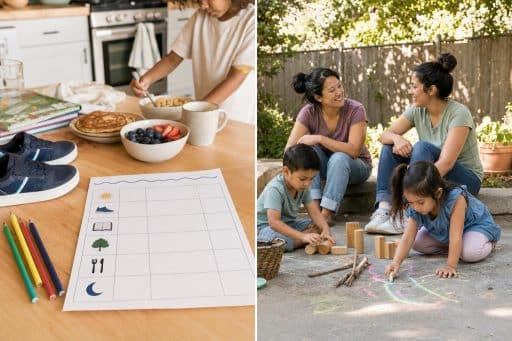
A simple daily routine can support calmer days. That fits summer too, if the routine leaves room to breathe.
Use Blocks Instead of Minute-by-Minute Plans
A summer routine for kids should leave space. A block schedule can help because it gives the day direction without asking everyone to live by a timer.
For many families, the day can be grouped like this:
- Morning: breakfast, small chores, outside time
- Midday: lunch, reading, quiet play
- Afternoon: errands, friends, pool, park, or a project
- Evening: dinner, cleanup, family time, bedtime rhythm
That is enough structure for many homes. In my house, when one child asks, "What are we doing today?" I can point to the plan instead of making it up while pouring coffee. If a neighbor invites everyone over, the day can still bend.
Working parents can use the same idea with different blocks. A morning checklist, a quiet work block, a lunch check-in, and an afternoon activity basket can create rhythm around work, camp, grandparents, or child care.
Summer routines have to fit real homes. Some families have camp calendars. Some are watching every dollar. Some children need a visual list before transitions. The routine should support the child in front of you, not someone else's color-coded plan.
Protect Free Play
It is tempting to fill summer with enrichment. Sports, camps, lessons, and clubs can be wonderful. They can also crowd out the kind of free play that lets children imagine, move, negotiate, and settle into themselves.
Free time for play matters, and summer is one of the best seasons to protect it. In my family, free play is the margin that keeps summer from feeling overmanaged. I protect a few open stretches each week when my kids can build, read, invent a game, or drift outside without me turning it into a lesson.
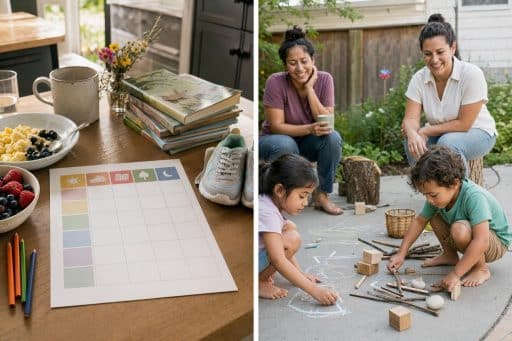
The American Academy of Pediatrics shares a helpful reminder that play helps children build social, language, and self-regulation skills. That does not mean every minute needs a purpose. It means open play is worth protecting, especially during a season that can fill up fast.
Parents do not need to entertain every hour. A little boredom can open the door to creativity. Keep the boundary simple and kind: "Screens are later. You can read, build, draw, go outside, or help me with lunch."
Make Screens Predictable
Screens are where many summer routines get fuzzy. A child asks for one show, then another. A game stretches longer than expected. A parent needs to finish a task. Before long, the screen becomes the default answer.
You do not have to make screens the villain. Just make them predictable.
Some families choose screen time after lunch. Some save it for late afternoon. Some use it only on certain days. The point is to avoid having the screen question reopen every ten minutes.
It helps to pair screen time with off-screen anchors: outside time before screens, reading before games, chores before a movie, or a family walk after dinner. This keeps screens from becoming the center.
Give Kids a Say
Children are more likely to cooperate with a routine they helped shape. This does not mean they run the household. It means they get a voice inside the family frame.
At the start of the week, ask each child two questions:
- What is one thing you hope we do this week?
- What is one job you can help with most days?
Younger children might choose bubbles, pancakes, water play, or a library trip. Older kids might want a friend day, baking, a bike ride, extra reading time, or a project. Their jobs can be simple: watering plants, clearing the table, feeding pets, folding towels, packing the pool bag, or helping a younger sibling.
With three kids, I have learned that giving everyone a voice does not mean giving everyone the same choice. One child may want quiet reading. Another may want outside time before breakfast. Another may mostly care that snack time is predictable. A flexible routine gives each child a place without turning home into a debate club.
Put the routine where everyone can see it. A whiteboard, paper calendar, or sticky note list is enough. The goal is not a perfect command center. The goal is fewer arguments about what comes next.
Keep a Reset Plan
Every summer routine needs a reset plan because real life will interrupt it. Someone will stay up late. It will rain during the park plan. A work meeting will run long. A child will wake up cranky. Vacation will throw everything off.
That does not mean the routine failed.
Choose a simple reset phrase for your family: "We start again at lunch" or "Next anchor, fresh start." This keeps one messy morning from becoming a messy week.
A reset list can help too. Keep five easy options ready:
- Read together for ten minutes.
- Take a walk around the block.
- Put on music and clean one room.
- Make a snack plate.
- Set a timer for quiet play.
Small resets work because they give everyone a next step without a lecture.
For low-cost structure, keep a short family list of easy summer options: library visits, neighborhood walks, backyard water play, meal prep, a kindness project, a park morning, or a book basket. A few inexpensive school-break activities or simple summer projects can help on rainy days or low-energy afternoons. Summer does not have to be expensive to feel steady.
A Simple Summer Routine for Kids
Here is one example from my family:
Morning: breakfast, get dressed, make beds, outside play.
Late morning: chores, errands, library, park, or a simple home activity.
Midday: lunch, reading, quiet time.
Afternoon: pool, friends, crafts, camp pickup, or free play.
Evening: dinner, cleanup, family walk or game, bedtime routine.
This is not a rule. It is a starting point. Your family's version may look different because of work schedules, ages, weather, budget, transportation, and energy. A routine that fits your actual life will serve you better than a beautiful one nobody can keep.
One Gentle Place to Start
If summer already feels scattered, do not rebuild everything at once. Pick one anchor. Maybe breakfast and getting dressed happen before screens. Maybe lunch is followed by quiet reading. Maybe evenings land with cleanup and a read-aloud.
Start there for a few days. Once that feels normal, add another anchor.
Kids do not need a perfect summer. They need connection, rest, play, responsibility, and enough structure to know where the day is going. A simple rhythm can give them that while leaving summer room to feel like summer.
Start with a simple daily rhythm, protect room for free play, and keep a few easy school-break activities your family can adapt for summer.

Meet Sophia Richards Sophia Richards is an early childhood educator, passionate writer, and the proud mom of three energetic kids. With a degree in Education and over a decade of hands-on classroom experience, Sophia bridges the gap between professional teaching strategies and everyday family life. At More4Kids, she translates complex child development concepts into practical, actionable parenting tips that families can use at home.
Whether she is sharing positive reinforcement techniques, educational crafts, or honest reflections on the chaos of raising three children under one roof, Sophia’s goal is to empower parents to foster resilience and joy in their kids. When she isn’t writing or lesson planning, you can find her organizing neighborhood scavenger hunts or trying out new kid-friendly recipes.
Areas of Expertise: Early Childhood Education, Positive Parenting, Sibling Dynamics, Educational Play, Family Wellness.





Add Comment