




More4kids is a Parenting resource dedicated to helping encourage children's intellectual and growth. Welcome to Parenting at More4kids!

by Joy Burgess

Are there things you may not have said recently that your child may need to hear?

Are there things you may not have said recently that your child may need to hear?

We are generally aware of what we say to our teens.  We try to be positive, not use negative language, try to speak clearly so that there is no question about what you are trying to communicate to them.  But did you ever think about what you don't say to your teen?  Are there things that you aren't saying to your teen that they want or need to hear?  "What do you wish your parents would say to you?"  This was the provocative question posed on the website Words are Powerful: The Love Project.

The answers ranged from simple to complex, from funny to heartbreaking, but through it all, a pattern emerged.  There are some consistent things that children not only want, but need to hear from their parents.  Words are powerful, but the words we don't say can be just as powerful.  Just because you think it, does not mean that your child automatically knows it, or doesn't need to hear it.

Have you said these ten things to your child recently? 

1) I love you

Of course you love your child, no doubt about it, but when was the last time you actually said it?  Sometimes we get so wrapped up in what we are doing in our jobs, in our personal lives, in our relationships that we forget to say the obvious but important things.  Don't take it for granted that your child knows that you love him or her.  Say it.  Sometimes they just need to hear the words.

2) I am proud of you

There are things about your child that make you proud.  Maybe they have a gentle, giving heart or maybe they have an exceptional artistic ability.  Find at least one thing in your child that you are proud of and let them know about it.  When you talk about your child to others, what do you say?  What elements about him or her do you mention, even brag about to others?  If you find that you are only seeing the negative, then it is a good time to find something positive, something good.  Then let them know about it.  You might be surprised in the attitude change that a simple "I am proud of you" can bring.

3) I support you in the things you want to do in your life

Your teen is not you.  They have different likes and dislikes, they have different interests.  To many teens, the feeling that they are not recognized as individuals is very real - and very frustrating.  Maybe they grew up in a family of lawyers, but they want to be a writer.  Maybe they feel drawn to a different religion or lifestyle.  Maybe they grew up in a large family with lots of kids, but have chosen to only have one or two children when they "grow up" and start a family.  Whatever the differences are, there is usually at least some anxiety involved when they tell you about it.  As a loving, supportive parent, just saying "I support you in the things you want to do in your life" can make all the difference. READ More on Ten Things your Teen would like to Hear you say to Them

[Post to Twitter]  [Post to Yahoo Buzz]  [Post to StumbleUpon] 

Filed under Parenting, Teenagers by

by Jennifer Shakeel

Some troubled teens turn to drugs - will this happen to your teen?

Some troubled teens turn to drugs - will this happen to your teen?

There are few things that scare me as a parent. One of those scary things is the thought of one of my kids doing drugs then compound that with the fact that it could slip under my nose. We all want to sit there and think that our children wouldn't do something like that. I urge you to take alook at the current national statistics on Adolescent drug abuse, all of which can be found here http://www.adolescent-substance-abuse.com/signs-drug-use.html  You will be shocked at what you see. You will be even more shocked to find out that your own child has tried or is friends with someone that has tried an illicit substance.
The goal of this week's tips then is to offer you ways to spot drug/substance use and how to stop it from occurring at all or again.

Tip One: Know the Signs of Drug Abuse

It is difficult to spot something if you don't know what it is you are looking for. So I want to give you 14 signs that your child is using drugs. Now keep in mind that they do not have to exhibit ALL of these signs, even one or two should be enough for you to be concerned. Here they are:

• Abnormal sustained fatigue or bursts of energy
• Drastic change in mood with no rhythm or reason to it.
• Change in sleep or appetite patterns
• Decline in personal hygiene
• Withdrawal from family activities or decline in adherence to family rules
• Change in friends or loss of interest in typical activities
• Decline in school performance and/or attendance
• Loss of job or irresponsibility during work that is pointed out
• Aggressive behavior
• Unaccounted for blocks of time
• Being caught in lies about whereabouts or events
• Unexplained loss of money or possessions
• Finding drug paraphernalia or noticing a lot of material with drug references
• Legal involvement

Tip Two: Get Involved with Your Child

READ More on Parenting Tips: Catching and Preventing Adolescent Substance Abuse

[Post to Twitter]  [Post to Yahoo Buzz]  [Post to StumbleUpon] 

15 Low Cost or No Cost Ideas for Spending Time with your Teenager

by Stephanie Partridge

Mom & Teen Son Talking - Time is the best investment in your childYou don't have to spend a fortune to have fun with your family. You can spend quality time together without shelling out lots of money. Too many people think that they have to coordinate a big trip and they focus on saving money for it and planning it, but often that big trip never happens. If it does, the pace is usually so hectic that the family does not really get to spend the quality time together that they had intended. It doesn't have to be that way though. You can start tonight spending quality time with your teen and creating a bond that will last forever. You can start with just the money in your pocket, even if you don't have two dimes to rub together. Try some of these ideas and see if they don't make a difference in your family.

1. Play "Ten Good Things"

Cost: $0
This is a game that my youngest son came up with and it has become a favorite with our family. Each person takes a turn saying ten good things about someone else. For instance, my son may say ten good things about his sister, then she may say ten good things about me and I would say ten good things about my son. What usually happens is that everyone starts jumping in helping to make "the list" of ten good things. It is fun and often surprising when you actually hear the good qualities that others see in you. My kids have told me many things about myself that I did not even realize. Family friends come over to play this with us as well. It is just a fun, wholesome, feel-good game where everyone is a winner.

READ More on Bond with your Teen Tonight

[Post to Twitter]  [Post to Yahoo Buzz]  [Post to StumbleUpon] 

Teen depression, teen suicide, rebellious and ungrateful teens, parents that 'just don't get yet' or understand. We hear these words too often, these are all too common problems, and each side tends to blame the other.

The video you are about to watch should be viewed by both parents and Teens, ideally both at the same time. As a parent, the video took me aback, made me sad, made me angry, and challenged how I communicate with my own kids. It is a very 'in your face' video that challenges and provokes thought.

No matter how good a parent we think we are, we should always be looking at improving our relationship and communication with our kids. And if we are lucky parents that have a great relationship with our kids, maybe we can help those that don't.

Communication, those 'words' we use everyday are so important, those 'words' can easily be taken for granted, yet many times those 'words' can be so misunderstood between parent and child.

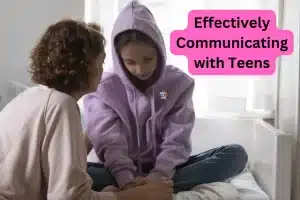
As parents we want our children to succeed, but yet, we can push a child away by the words we use. As a teenager, we are wanting more and more independence, but yet, we can easily become confrontational with the words we use when trying to express ourselves. Even though it may have been years since I was a teen, I still remember. READ More on Parent-Teen Communication: Start the Conversation Today!

[Post to Twitter]  [Post to Yahoo Buzz]  [Post to StumbleUpon] 

Filed under Parenting, Teenagers by

by Stephanie Partridge

Mother and Son ArgumentAt some point as a parent, regardless of how great your relationship is with your teen, you will butt heads and go through some struggles. You teen will begin trying to separate from you and become an individual. They want to be independent, in control of their own lives and make their own choices. While it may be difficult and even painful for both of you, these struggles are actually good for your teen - and for you. If you handle these struggles properly, you can actually strengthen your relationship with your teen while making both of you stronger, wiser and better decision makers. These survival tips will help.

Don't - Fall in the Parent Trap

Many parents fall into what I call the "Parent Trap." They play that parent card like they were playing a winning hand in a million dollar poker game. They over use the power (bordering on abusing it), completely controlling the situation and giving the child no leeway whatsoever. Do you want a kid who sneaks out after you go to sleep or who wears one thing out then changes into a "forbidden" ensemble in the gas station restroom after they leave your house? Well, that is exactly what you are going to get if you control every aspect of your child's life. And if you say, "MY child wouldn't do something like that" you are especially at risk. You are kidding yourself and your child probably already has done something like that. READ More on Parent and Teen Struggles: A Survival Guide

[Post to Twitter]  [Post to Yahoo Buzz]  [Post to StumbleUpon] 

Filed under Parenting, Teenagers by

An Interview with Randy Loren by Jennifer Shakeel

Teenagers and Money - The importance of money managementThere are times in my profession that I am blessed with the job of interviewing amazing people that are trying to do something incredible to help children and adults. This past week was one of those experiences. I was able to interview Mr. Randy Loren, author of the book Climbing the Money Mountain. This book, his mission really, is to make sure that each and every child in this country leaves high school with a certain level of financial literacy. Our children are the leaders of the future and if we do not equip them with the knowledge and skills they need to manage their lives how can we expect them to manage our country?

My first question to any author is what inspired them to create their latest project. For Mr. Loren it was his own teenage daughters. He had wanted to have a conversation with them about money and finances, and his one daughter, Mandy, who was interested in the topic but not in the conversation told him it would be better if he wrote her a letter and she would read it. His reply was, "How about if I write you a book."

While he was serious, his daughter laughed and told him to go ahead. So he began writing. I should back up for a moment. By profession Mr. Loren is a financial advisor with over 20 years experience helping grown adults sort out their financial matters. I asked him if he would agree with the statement that the reason so many kids are financially illiterate is due to the fact that many adults do not know how to effective manage money and that sometimes it is better to not pass on bad habits and let children figure things out on their own. He did agree.

READ More on The Importance of Teaching Our Children Financial Literacy

[Post to Twitter]  [Post to Yahoo Buzz]  [Post to StumbleUpon] 

by Stephanie Partridge

sad teenage girl being comfortedThe moment I heard my daughter's voice on the other side of my bedroom door, I knew something was wrong. She knocked, waking me. I looked at the clock: 12 am. “Mom,” She said, “I need to talk to you.” Her voice was strained, tight. I could tell that she was struggling to keep it together. Something was wrong. I was out of bed in a heartbeat.

“What's up?” I asked as I opened the door. Her face did not reveal much, but I could see she was upset. Her trembling hand matched her trembling voice as she thrust a cell phone at me.

“Look.” She said.

It took me a moment to process what I was seeing, a text from someone to someone asking for nude photos and promising nude photos in return. My first reaction was that she had encountered some pervert somewhere and he was soliciting her. My mind began forming a plan of action. I wanted to throttle the creep, then it hit me. I KNEW this number, the sender of the text message. I also realized that this was not her phone, but her friend's cell. The picture slowly came into focus. My daughter's boyfriend had sent this text to her friend! I felt the small hairs on the back of my neck bristle as the realization hit me. The boy was a player and my daughter was heartbroken.

What had started out as a joke, two teenage girls sending a random message to my daughter's boyfriend had turned into major drama. A joke had turned into a tragedy. He had responded in a way that neither girl expected. At that midnight hour, the boyfriend had realized his blunder and come over to our house, only to be confronted by my son (also my daughter's best friend and strongest ally) who was not too happy that his sister was hurt by this guy.

Major drama in our house that night. READ More on Parenting Teens: Breakups and Broken Hearts

[Post to Twitter]  [Post to Yahoo Buzz]  [Post to StumbleUpon] 

by Jennifer Shakeel

happy young teenage girl enjoying the dayThere are children that are born that are just naturally independent, and there are other children that are less independent. As children grow we as parents need to encourage them to be independent. We want to know that when they are grown and on their own that they will be able to take care of themselves. Regardless of how old or young your child is, it is never to early or too late to encourage them to do things on their own.

Idea One: Don’t Give Answers Provide Direction

This applies more to school age children who are coming home with homework. I think it is natural for all children to ask for help with their homework… but to a good chunk of children help means they want you to give them the answers. Part of this is because we as parents want to make things easier for our kids so that they don’t get discouraged. In doing so though, we are taking away their independence.
This doesn’t mean you can’t help them. But only help, provide them direction and don’t give them the answer. For example, “How do you spell _____?” We don’t spell the word for our children. Instead we ask, “How do you think you spell it?”

Idea Two: Encourage Them to Try it On Their Own

Some kids will demand the chance to do things on their own. “Let me do it!” I am sure is something that we have all heard at one time or another. When they want to do it on their own, let them. For example the first time they want to dress themselves for school… or for the day, let them… and then let them wear what they put on. Hopefully it matches, and if it doesn’t then say, “Honey, that doesn’t really match are you sure you want to wear it?” Their answer is going to be yes, and they are going to tell you how it matches… let them wear it. Trust when I tell you that as they get older, you will say more than once to them, “Really, that is what you are wearing today?” I call it the hazards of teenagers and their taste in clothes.

READ More on Parenting Tips: Encouraging Independence

[Post to Twitter]  [Post to Yahoo Buzz]  [Post to StumbleUpon] 

mother and teenage daughter having an early morning talkYounger kids love to talk, but once kids hit those teen years they seem to clam up. It can be frustrating when you try to get your teen to share what is going on in their life. Sometimes it's just hard to get them talking. Keeping in touch with your teen is definitely important, but if you can't get them to talk, it makes it difficult. There are some things that you can do to get your teen talking. Here are some of the top ways that you can start getting your teen to open up and talk to you.
 
Idea #1 - Make Sure You Are Available to Your Teen - If you want your teen to talk to you, you actually have to make sure that you are available to your teen. After all, if you are too busy to ever have time to talk, they aren't going to talk to you. Kids know when you are busy and when you are too busy, you are more likely to brush them off. When you take time out for the kids and make yourself available to your teen, they will be more likely to come to you for a talk.
 
Idea #2 - Don't Try Too Hard - Many parents make the mistake of trying to hard to get their kids to talk to them. This often makes them resist talking even more. Take away the pressure and relax. When you stop pushing and pressuring them, more than likely they will realize this and will be more likely to talk to you.
 
Idea #3 - Get Involved in Activities Together - Another way that you can get your teen to talk is to get involved in activities together. Do activities that they enjoy. It doesn't matter whether it is a physical activity or something creative. Both have a way of opening up your teen. Teens tend to start talking when they are doing things.

READ More on Ideas to Help Get Your Teen Talking to You

[Post to Twitter]  [Post to Yahoo Buzz]  [Post to StumbleUpon] 

Filed under Parenting, Teenagers by

Bored and procrasting teen - learn how to motivate and encourage themAre you a parent who has been trying to determine how to help your teenager overcome procrastination? If so, you may be pleased to know that there are several steps that you can take in order to help encourage proper time management in your teenager’s life. It has been estimated that approximately 90% of all students procrastinate at one point or another. While in his statistic he was highlighting students in college, this is a common figure when it comes to high school students as well. This psychologist was named William Knaus. In this educational time management how-to guide, you will learn about how to help your child overcome the burden of procrastination.

Tip 1 - Recognize It:

The first step to helping your teen overcome the issue of procrastination is to recognize it. You may find that your child knows that they need to do something, such as their homework, but they seem to avoid it altogether. Eventually, it will come to the point where they have very little time left to do what is needed. In turn, this results in a variety of potentially devastating emotions and feelings. These include feeling guilty, feeling as if they are not good enough and even depression in severe cases.

READ More on Tips to Help Your Teen Overcome Procrastination

[Post to Twitter]  [Post to Yahoo Buzz]  [Post to StumbleUpon] 

Filed under Parenting, Teenagers by

  Parenting Blogs -  Blog Catalog Blog Directory  Blog Directory & Search engine  Blog Directory - Blogged  My Zimbio